NightLase for Snoring: What It Does and When Medical Screening Matters
TREATMENTS
NightLase for Snoring: What It Does and When Medical Screening Matters
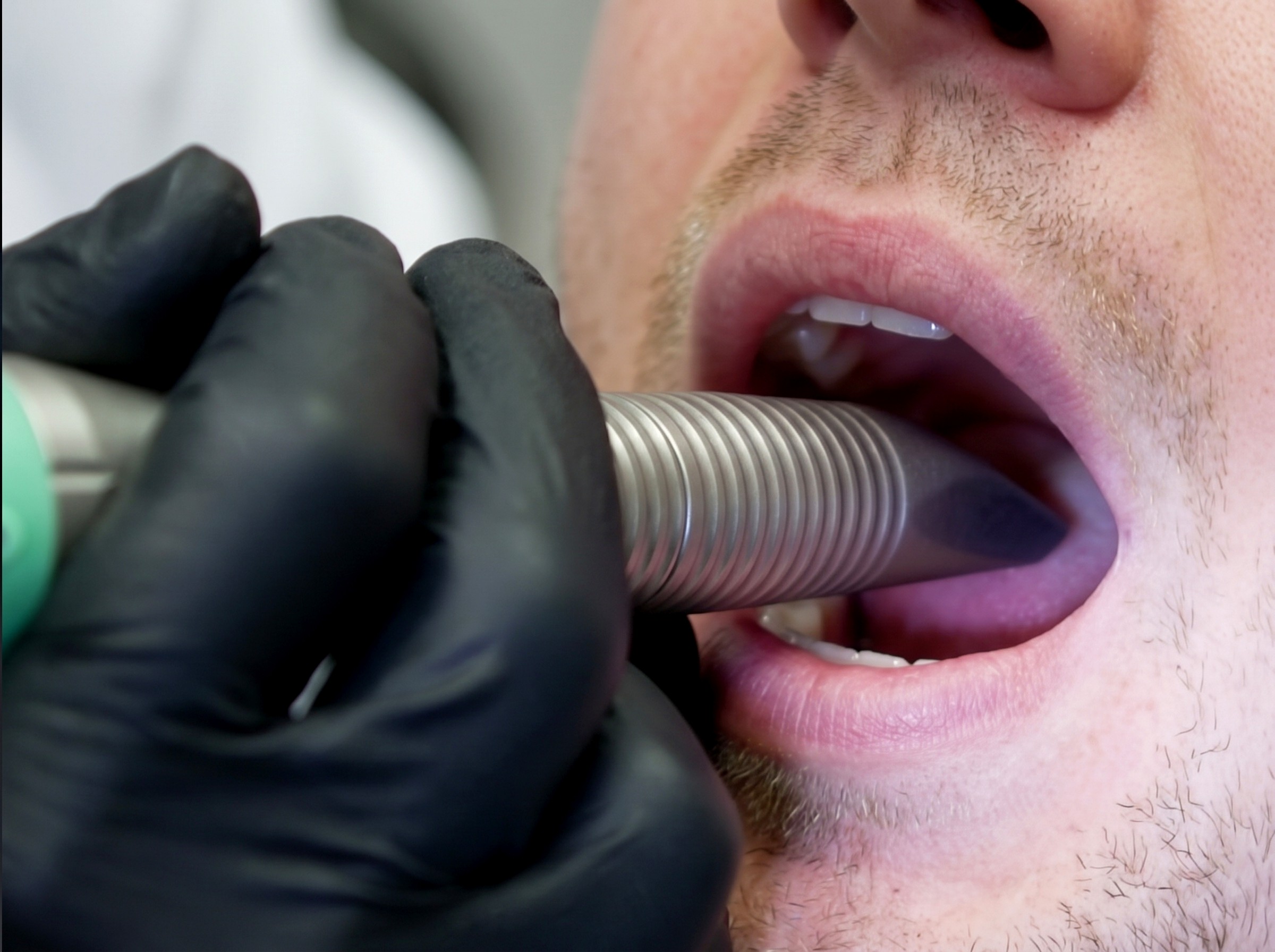
NightLase is a non-invasive Fotona laser treatment designed to reduce snoring in selected patients. It delivers controlled Er:YAG laser energy to tissues in the mouth and soft palate, creating a thermal effect that contracts existing collagen and stimulates new collagen formation. The goal is to make the tissue firmer and less likely to vibrate during sleep.
It is important to draw the boundary clearly: NightLase is not a substitute for diagnosing or treating obstructive sleep apnea. Snoring can exist on its own, but it can also be a sign of sleep-disordered breathing. If your history suggests sleep apnea, begin with a Lumini consultation. We screen for warning signs, pause the laser plan when OSA is suspected, and guide the diagnostic evaluation required before treatment.
Snoring and sleep apnea are not the same thing
Primary snoring is the sound produced when air causes relaxed tissues in the upper airway to vibrate. Obstructive sleep apnea, or OSA, involves repeated episodes in which breathing becomes restricted or stops during sleep. A person may snore without having OSA, and a person with OSA may not realize how often breathing is interrupted.
The American Academy of Sleep Medicine states that only a medical provider can diagnose primary snoring or obstructive sleep apnea. A home sleep apnea test is a medical assessment tool, not a consumer screening shortcut, and its results must be interpreted in the context of a clinical evaluation.¹
Before considering NightLase, seek a sleep evaluation if you have any of the following:
- Witnessed pauses in breathing, gasping or choking during sleep
- Habitual loud snoring plus excessive daytime sleepiness
- Morning headaches, impaired concentration or unrefreshing sleep
- High blood pressure or other significant cardiometabolic risk factors
- A prior diagnosis of sleep apnea, or current CPAP or oral-appliance therapy
NightLase should never be used to delay a sleep study, replace CPAP or an oral appliance, or imply that an untreated airway disorder has been resolved.
How NightLase works
NightLase uses the Er:YAG wavelength in Fotona’s non-ablative SMOOTH mode. Rather than removing tissue, the laser delivers a sequence of gentle thermal pulses to selected areas of the oral mucosa, typically including the soft palate and surrounding tissues. The controlled heating produces two related effects:
- Immediate collagen contraction, which can temporarily increase tissue firmness.
- Gradual collagen remodeling, which develops over the weeks following treatment.
Firmer tissue may vibrate less as air moves through the upper airway, reducing the intensity or frequency of snoring. The treatment does not remove tissue, surgically enlarge the airway or mechanically hold the jaw forward.²
That mechanism also explains why NightLase is delivered as a series rather than a one-time procedure. Collagen remodeling is progressive, and response varies with anatomy, age, tissue laxity, weight, nasal obstruction, sleep position, alcohol use and other contributors to snoring.
What the clinical evidence shows
The evidence is encouraging for subjective snoring reduction in carefully selected patients, but it does not support presenting NightLase as a cure for sleep apnea.
A randomized, sham-controlled clinical trial enrolled 40 adults with primary snoring, a body mass index of 30 or lower and an apnea-hypopnea index below 15. Participants received three NightLase sessions or sham treatment. The laser group reported greater improvements in snoring severity and partner-assessed snoring, with no complications reported in the study.³
A systematic review and meta-analysis covering seven studies and 247 patients found a significant reduction in subjective snoring scores, an overall satisfaction rate of approximately 80% and minimal reported side effects. However, the analysis did not find a significant change in apnea-hypopnea index or respiratory disturbance index. The authors also noted that stronger randomized studies with longer follow-up were still needed.⁴
The practical interpretation is straightforward: NightLase may help reduce the symptom of snoring for selected patients, while objective breathing disorders still require appropriate sleep-medicine diagnosis and management.
Who may be a candidate
NightLase may be considered when snoring appears to be related to vibration and laxity of the soft-palate tissues, the patient understands that results vary, and important causes of sleep-disordered breathing have been evaluated.
A Lumini consultation should review your sleep history, medications, alcohol and tobacco use, nasal breathing, oral anatomy, prior sleep testing and any existing OSA treatment. If screening points to possible OSA or another airway disorder, Lumini pauses NightLase and guides the required next step, which may include sleep or ENT evaluation, weight-management support, positional therapy, treatment of nasal obstruction, an oral appliance or CPAP before laser treatment.
NightLase may not be appropriate during pregnancy, when there is active infection or an untreated lesion in the treatment area, when the patient cannot safely tolerate oral laser treatment, or when expectations are inconsistent with what the evidence supports. Final candidacy is determined after an in-person evaluation.
What a NightLase session is like
A typical session at Lumini takes about 30 minutes. No incisions or injections are involved, and Fotona describes the protocol as non-invasive, with immediate return to normal daily activities for most patients.² You remain awake while controlled laser pulses are delivered inside the mouth. Patients commonly describe warmth rather than pain, although sensitivity varies.
Lumini uses a three-session starting protocol, individualized after evaluation. Fotona’s broader manufacturer protocol commonly uses three to five sessions at approximately three-week intervals.² The number and spacing of sessions may change based on anatomy, clinical response and the supervising provider’s judgment.
Temporary throat dryness, mild irritation or a warm sensation can occur. You should follow the specific aftercare instructions provided at your visit and contact the clinic if a symptom is unexpected or persistent.
When results appear and how long they last
Some patients notice a change early in the series, while others improve gradually as collagen remodeling develops. There is no guaranteed percentage reduction, and a partner’s observation can be as useful as the patient’s own perception because the patient is asleep when the snoring occurs.
Results are not necessarily permanent. Aging, weight change, alcohol use, nasal congestion and changes in airway anatomy can affect snoring over time. Maintenance treatment may be discussed when a patient responded to the initial series and later notices recurrence. A return of snoring accompanied by gasping, witnessed apneas or daytime sleepiness should prompt medical reassessment rather than automatic maintenance laser.
NightLase at Lumini Medical Spa in Aventura
Lumini offers Fotona NightLase in Aventura using the Fotona SP Dynamis platform. Care is physician-supervised, and candidacy begins with an evaluation rather than a promise. When screening suggests possible sleep apnea or another airway disorder, we pause NightLase and guide the required diagnostic next step before proceeding.
Our Medical Director, Dr. Thiago Queiroz, D.O., oversees clinical protocols. Lumini serves Aventura, Sunny Isles Beach, Bal Harbour, North Miami Beach and greater Miami, with care available in English, Spanish and Portuguese.
Frequently asked questions
Does NightLase treat sleep apnea? NightLase is offered to reduce snoring in selected patients. It should not be presented as a substitute for diagnosing or treating obstructive sleep apnea. Suspected OSA requires diagnostic medical evaluation before NightLase. Lumini begins with screening and guides the required next step.
How many NightLase sessions are needed? Lumini uses a three-session starting protocol, individualized after evaluation. Fotona’s broader manufacturer protocol commonly describes three to five sessions spaced about three weeks apart. The final plan depends on anatomy and response.
Is NightLase painful? No incisions or injections are involved. Patients commonly describe warmth during treatment, but comfort varies. Temporary dryness or mild throat irritation may occur.
Is there downtime after NightLase? Most patients can return to normal daily activities immediately. Follow the aftercare instructions provided by the treating team.
How quickly does NightLase work? Some patients notice improvement during the treatment series, while others improve gradually over the following weeks as collagen remodeling develops. Results vary and are not guaranteed.
Where can I get NightLase near Aventura? Lumini Medical Spa offers Fotona NightLase inside Aventura Mall, Suite 1954, serving Aventura, Sunny Isles Beach, Bal Harbour, North Miami Beach and greater Miami.
References
- American Academy of Sleep Medicine. Clinical use of a home sleep apnea test: An updated position statement. aasm.org.
- Fotona. Fotona NightLase. Official treatment information. fotona.com.
- Unver T, et al. The efficacy of Er:YAG laser treatment in snoring patients: A randomized controlled clinical trial. Lasers Med Sci. 2022. PMID: 35867153. PubMed.
- Viena P, et al. Effectiveness of Er:YAG laser for snoring: A systematic review and meta-analysis. Sleep Breath. 2020. PMID: 32112250. PubMed.
Medically reviewed by Dr. Thiago Queiroz, D.O., Medical Director, Lumini Medical Spa. Educational, not a substitute for an in-person consultation. This content does not replace a sleep-medicine diagnosis.