Enlarged Pores: Causes and Treatments That Improve Their Appearance
Enlarged Pores: Causes and Treatments That Improve Their Appearance
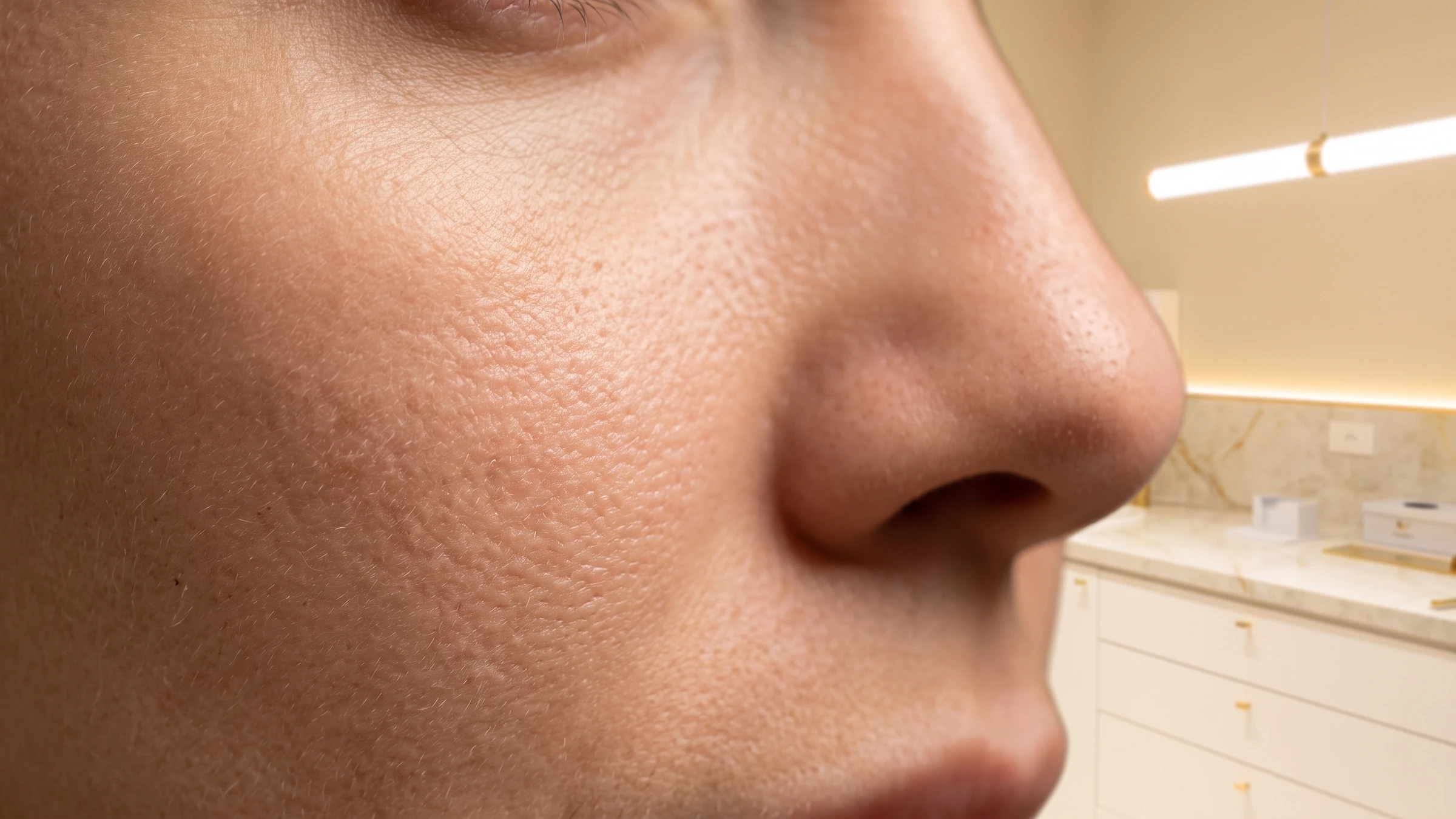
Enlarged pores are one of the most common skin concerns we hear about at Lumini Medical Spa, located inside Aventura Mall — and one of the most misunderstood. The question behind almost every search is the same: can you shrink pores? The honest answer is more nuanced than the skincare ads suggest. Pores do not have muscles, so they cannot be permanently opened or closed, and no treatment makes them disappear. What the right treatment can do is make them look smaller — by improving the skin around them, reducing the oil and debris that make them more visible, and rebuilding the collagen that keeps them supported. This guide explains what enlarged pores actually are, what makes them look bigger, which treatments have real evidence behind them, and what to expect from each one.
What enlarged pores actually are (and what they are not)
A pore is the opening of a hair follicle, usually with a sebaceous (oil) gland attached. Its size is set largely by genetics, by how much oil the gland produces, and by the strength of the collagen and elastin that surround it. When that support weakens, or when the opening fills with oil and dead skin, the pore looks larger.
Three things enlarged pores are not:
- They are not a hygiene problem. Pores do not open and close in response to hot or cold water, and washing harder does not make them smaller.
- They are not the same as acne scars. Icepick and boxcar scars can look like enlarged pores, but they are scars — a different problem with a different treatment path. Our acne scar guide covers that distinction.
- They are not the same as a dilated pore of Winer. That is a single, unusually large pore that behaves like a giant blackhead. It is a distinct finding, and it needs an in-person diagnosis rather than a general pore treatment.
What makes pores look bigger
Several factors can make pores more visible, and most people have more than one:
- Genetics. Some people simply have larger, more visible pores. This is the factor no treatment can change.
- Excess oil. More sebum means more light reflecting off the skin and more debris collecting in the opening.
- Age and collagen loss. As collagen and elastin decline, the tissue around the pore loses its firmness and the opening looks wider.
- Sun damage. UV exposure breaks down collagen and elastin over time, which is one reason pores often look worse in sun-exposed areas.
- Debris and congestion. Dead skin cells and oil that are not shed efficiently can stretch the opening.
- Facial volume loss. When the face loses volume, the skin can look less supported and pores can read as more pronounced.
What does not work: pore myths
Before the treatments worth your time, a few that are not:
- Pore strips. They remove the top of a blackhead and can make pores look clearer for a day, but they do not change pore size and can irritate the skin.
- “Pore-minimizing” primers and powders. These blur the look of pores temporarily with silicone or light-diffusing particles. They are cosmetics, not treatment.
- Hot water, steam, and “opening” the pores. Pores do not open and close. Steam can soften debris, which is why it is used before extractions, but it does not shrink anything.
- Toothpaste, lemon juice, and other DIY remedies. These irritate the skin and can cause post-inflammatory pigmentation, especially on deeper skin tones.
Treatments that improve pore appearance, at a glance
The treatments below are the ones with real evidence behind them for pore appearance. They work in different ways, and they are often combined:
| Treatment | What it does | Typical role |
|---|---|---|
| Microneedling | Stimulates collagen to firm the skin around pores | Series of sessions |
| Morpheus8 (RF microneedling) | Delivers radiofrequency energy through fine needles to remodel collagen deeper in the skin | Series of sessions |
| Fotona 4D laser | Heats collagen at several depths to tighten and improve texture | Series of sessions |
| Chemical peels | Exfoliate the surface and improve congestion and tone | Series, spaced out |
| Microtox (intradermal botulinum) | Reduces oil production in the treated area | Periodic maintenance |
| Skincare (retinoids, BHA, niacinamide, sunscreen) | Supports results between visits | Daily |
Microneedling and RF microneedling (Morpheus8)
Microneedling, also called collagen induction therapy, uses fine needles to create controlled micro-injuries in the skin. The repair response rebuilds collagen, which firms the tissue around the pore and makes the opening look smaller. It is one of the most studied texture treatments, and our microneedling guide explains how the process works in detail.
At Lumini, microneedling is offered with or without PRP. Results build gradually over a series of sessions, because you are rebuilding collagen rather than filling anything in one sitting.
Morpheus8 adds radiofrequency energy to the microneedling process. The needles deliver heat into the deeper layers of the skin, which remodels collagen more aggressively than needles alone. A 2022 real-world study of 75 patients found that fractional microneedle radiofrequency improved the appearance of enlarged facial pores, and a 2024 study of a Chinese cohort reported similar results on the cheeks. A 2024 international consensus on pin-based fractional radiofrequency supports its use for aesthetic skin indications.
Two honest caveats. First, the U.S. Food and Drug Administration has issued a safety communication about the potential risks of certain uses of radiofrequency microneedling, including burns and scarring when the energy is not appropriate for the skin — which is why device selection and settings matter. Second, results are gradual and maintenance-dependent. Morpheus8 is not a one-time fix.
Laser resurfacing (Fotona) and chemical peels
Fotona 4D is a no-needle laser protocol that heats collagen at several depths, including from inside the mouth, to gradually firm and smooth the skin. It is often chosen for overall texture and tone rather than pores alone, and it pairs well with microneedling in a staged plan.
Chemical peels exfoliate the surface of the skin. Depending on the peel, they can improve congestion, tone, and the look of pores. At Lumini we offer glycolic, salicylic, TCA, and VI peels, matched to your skin and goals. Our chemical peels guide covers the types, and our chemical peel vs. microneedling comparison explains how to choose between them — the short version is that peels work on the surface while microneedling works deeper, and many plans use both.
Lavieen, a Q-switched laser we offer, is best known for improving tone and texture. It is not a pore treatment first, but it can be part of a plan for overall skin quality. Our BB laser and Lavieen guide covers what it can and cannot do.
Peels and lasers both carry a risk of post-inflammatory hyperpigmentation, especially on deeper skin tones. Your provider should assess your Fitzpatrick skin type before choosing a peel or laser, and sun protection is non-negotiable before and after.
Microtox (intradermal botulinum) and at-home skincare support
Microtox — very small amounts of botulinum toxin placed in the skin rather than in a muscle — is a technique we explain in full in our Microtox guide. The effect that matters for pores is a reduction in oil production in the treated area, which makes pores look less prominent. A 2025 randomized clinical trial compared intradermal injection with microneedling-assisted injection for enlarged facial pores and found that both approaches improved appearance.
The labeling point is pore-specific and worth stating plainly. Botulinum toxin products are FDA-approved for uses such as glabellar lines and crow’s feet. Using them to reduce oil production and improve pore appearance is an off-label use — a recognized and common use, but not part of the product’s approved labeling. Your provider should explain that distinction before treatment.
Skincare is the foundation that supports everything else. The ingredients with the most evidence for pore appearance are retinoids (which normalize shedding and support collagen), salicylic acid and other BHAs (which clear oil and debris from the opening), and niacinamide (which can help regulate oil and support the skin barrier). Daily sunscreen is the single most important step, because sun damage is one of the main drivers of collagen loss around pores. Skincare alone will not close pores, but it keeps the results of in-office treatment from sliding back.
At Lumini Medical Spa (Aventura Mall)
We offer microneedling (with optional PRP), Morpheus8 radiofrequency microneedling, Fotona 4D laser, Lavieen, and a range of chemical peels, and we build every pore plan around your skin type, your goals, and your timeline. Pricing is personalized at your consultation, because the right combination and number of sessions depend entirely on your skin. Our team treats patients in English, Spanish, and Portuguese, and we serve Aventura, Sunny Isles, Bal Harbour, and North Miami Beach. Book a consultation at Lumini Medical Spa, 19565 Biscayne Boulevard, Suite 1954, Aventura Mall, Aventura, FL 33180 · (305) 974-2434 · info@luminimedspa.com · Book online.
Frequently asked questions
1. Can you actually shrink enlarged pores?
Not permanently. Pores do not have muscles, so they cannot be closed. What treatment can do is make them look smaller by firming the skin around them, reducing oil and debris, and rebuilding collagen. The improvement is real, but it is an improvement in appearance — and it needs maintenance.
2. What causes enlarged pores?
Genetics, excess oil, age-related collagen loss, sun damage, congestion, and facial volume loss. Most people have more than one of these at once, which is why a single product rarely solves the concern.
3. Does microneedling help with large pores?
Yes. Microneedling stimulates collagen, which firms the tissue around the pore. It is one of the better-studied texture treatments, and it is usually done as a series of sessions spaced a few weeks apart.
4. Does Morpheus8 help with pores?
Yes. Morpheus8 adds radiofrequency energy to microneedling, which remodels collagen deeper in the skin. Studies of fractional microneedle radiofrequency have reported improvement in enlarged facial pores, including on the cheeks.
5. What is the best treatment for large pores?
There is no single best treatment. For congestion and surface texture, a peel may be the most direct option. For firming and collagen, microneedling or Morpheus8. For oil-driven pores, microtox. Most plans combine two or more, and the right choice depends on your skin type and goals.
6. How many sessions will I need?
Most texture treatments are done as a series — typically three to six sessions spaced a few weeks apart — because you are building collagen over time. Your provider will give you a range based on your skin, and the plan is reviewed as you go.
7. Can skincare alone fix enlarged pores?
No. Skincare supports results and slows the return of congestion, but it cannot rebuild collagen the way in-office treatment can. The most effective approach combines both. Pricing is confirmed after consultation because it depends on the treatments chosen and the number of sessions. Consultations are complimentary with any same-day treatment; otherwise $200. See our pricing page for published prices.
References
- Lee SJ, Seok J, Jeong SY, Park KY, et al. Facial Pores: Definition, Causes, and Treatment Options. Dermatologic Surgery. 2016;42(3):277-285. PMID: 26918966. https://pubmed.ncbi.nlm.nih.gov/26918966/
- Dong J, Lanoue J, Goldenberg G. Enlarged facial pores: an update on treatments. Cutis. 2016;98(1):33-36. PMID: 27529707. https://pubmed.ncbi.nlm.nih.gov/27529707/
- Ren K, Liu H, Li B, Zhou B. Fractional microneedle radiofrequency treatment for enlarged facial pores: a real-world retrospective observational study on 75 patients. Journal of Cosmetic Dermatology. 2022;21(12):6742-6753. PMID: 36038248. https://pubmed.ncbi.nlm.nih.gov/36038248/
- Huang Y, Zheng H, Wu Q, Zhang M. Efficacy and safety of fractional micro-needling radiofrequency for the treatment of enlarged pores on the cheeks of a chinese cohort: a retrospective study. Lasers in Medical Science. 2024;39(1):100. PMID: 38609686. https://pubmed.ncbi.nlm.nih.gov/38609686/
- Iraji F, Moeini R, Abedini M, Mousavi MS, et al. Comparison of Intradermal Versus Microneedling-Assisted Botulinum A Toxin Injection for Enlarged Facial Pores: A Randomized Clinical Trial. Journal of Cosmetic Dermatology. 2025;24(6):e70114. PMID: 40522143. https://pubmed.ncbi.nlm.nih.gov/40522143/
- Waldorf HA, Ross V, Adatto M, Artzi O, et al. Pin-Based Fractional Radiofrequency: 2024 International Consensus Recommendations for Aesthetic Skin Indications. Journal of Drugs in Dermatology. 2025;24(8):817-824. PMID: 40773612. https://pubmed.ncbi.nlm.nih.gov/40773612/
- Kim JE, Lee HW, Kim JK, Moon SH, et al. Objective evaluation of the clinical efficacy of fractional radiofrequency treatment for acne scars and enlarged pores in Asian skin. Dermatologic Surgery. 2014;40(9):988-995. PMID: 25099295. https://pubmed.ncbi.nlm.nih.gov/25099295/
Medically reviewed by Dr. Caio Trentin, M.D., Physician, Lumini Medical Spa. Educational information only. It does not replace an in-person assessment. Individual results vary.