Laser Hair Removal: How Many Sessions Do I Need (and Why)?
TREATMENTS
Laser Hair Removal: How Many Sessions Do I Need (and Why)?
If you’re researching laser hair removal in Aventura, Florida, the most common question is: “How many sessions will I need?” The technical answer is: it depends on your biology and the treatment protocol, but there is an expected range for most people. Understanding the “why” helps you start with realistic expectations and choose a plan that is both effective and safe.
Why isn’t there a “fixed” number of sessions?
Laser hair removal works best when hair is in the anagen phase (active growth), because that’s when there is more target (melanin) connected to the follicle. Since not all hairs are in the same phase at the same time, repeated sessions are needed to treat different groups of follicles throughout the hair-growth cycle.
In addition, results depend on:
- hair characteristics (color and thickness),
- skin phototype (skin tone),
- treatment area,
- hormonal and metabolic factors,
- device settings and technique, and
- session consistency and spacing.
- How many sessions are common per area?
The numbers below are a clinical reference for most patients, assuming appropriate candidacy and a well-designed protocol.
Areas with strong response (typically 6–8 sessions)
Underarms
Lower legs / legs
Bikini line
- Arms (especially when hair is darker and coarser)
- Areas that often require more (typically 8–12 sessions)
Brazilian
Back and chest (especially in men)
Beard area (neck and jawline)
“Hormonal” areas with more variability (often 10–14+ sessions)
Female facial hair (upper lip/chin)
- Chin and jawline
- Lower abdomen / linea alba
Areas influenced by hormonal stimulation (e.g., PCOS)
Why? Hormonal areas have a higher likelihood of new follicles being recruited over time, which increases the need for additional sessions and maintenance.
1) Skin tone (phototype)
Modern technologies can safely treat a wide range of skin tones, but treatment planning changes:
With lighter skin tones, there is often greater flexibility in settings.
With deeper skin tones, energy must be adjusted more carefully to protect the epidermis, which can influence the pace of response.
Bottom line: the device and protocol must be matched to your phototype to maintain both safety and efficacy.
2) Hair color and thickness
Dark, coarse hair: tends to respond better and faster (more target for the laser).
Light, red, gray/white hair: typically responds less.
Fine vellus “peach fuzz”: may have limited response and, in some cases, may not be an ideal candidate.
3) Treatment area
Areas differ in:
- follicle density,
- follicle depth,
- growth cycle,
- hormonal influence.
That’s why underarms and legs often respond more predictably than the face or beard area.
4) Hormones (one of the most important factors)
Conditions and situations such as:
- PCOS (polycystic ovary syndrome),
- thyroid disorders,
- starting/stopping hormone therapy,
- a family tendency toward hirsutism,
can increase the number of sessions and the need for maintenance. Laser can still work very well, but the plan needs to be realistic and is often longer-term.
5) Session consistency and spacing
Skipping sessions or shortening/lengthening the interval too much can reduce efficiency. The ideal approach is to follow the recommended spacing for the treatment area.
6) Protocol quality (settings and technique)
Consistent outcomes depend on:
- appropriate fluence/energy,
- proper pulse duration,
- correct spot size,
- effective cooling,
- uniform coverage of the area.
This is why an in-person consultation and, when appropriate, a test spot can be so helpful.
What’s the ideal interval between sessions?
Face: typically every 4–6 weeks
Underarms and bikini: typically every 4–8 weeks
Legs and arms: typically every 6–10 weeks
Back/chest: typically every 6–10 weeks
Your provider will adjust the interval based on your response and regrowth pattern.
What to expect: realistic results
After 1–3 sessions
Slower regrowth
- Hair returns more “sparse,” sometimes finer
- Skin often stays smoother/”cleaner” for longer between hair removal
- After 4–6 sessions
- More noticeable reduction in density
- Longer time between shaving
- Fewer ingrown hairs (many patients report improvement)
- After 6–10 sessions
- More consistent long-term reduction
- Some “stubborn” patchy areas may remain, especially in hormonal zones
Maintenance
Even with excellent results, maintenance sessions are common (e.g., yearly or twice yearly), especially for:
- hormonal areas,
- men (beard, back/chest),
- patients with hormonally driven regrowth.
- Pre-session checklist (to improve safety and efficacy)
- 48–72 hours before
- Avoid intense sun exposure and tanning (including self-tanner)
Avoid irritating products on the area (acids/retinoids on the face, as directed)
Inform your provider about medications and skin history
24 hours before
Shave the area (with a razor) as instructed
Avoid waxing/tweezing/epilators for weeks beforehand
Day of treatment
Arrive with clean skin (no lotion/oil/deodorant when applicable)
Report any recent injury, sunburn, cold sores, or active irritation
Post-session checklist (to reduce irritation and discoloration)
First 24–48 hours
Avoid excessive heat: sauna, very hot showers, intense workouts
Hydrate and use soothing products if recommended
Avoid scrubbing or hair removal on the area
Up to 7–14 days
Use sunscreen on exposed areas (critical to reduce the risk of hyperpigmentation)
Avoid direct sun exposure, especially if the skin is sensitive
If you notice mild shedding (“hair release”), that’s normal, do not pull the hairs
When to contact the clinic
blisters, burns, persistent intense pain, significant darkening of the skin, or any reaction outside what you were advised to expect
Conclusion: how to estimate your number more accurately
The best way to estimate how many sessions you’ll need is an in-person consultation, considering:
- skin phototype,
- hair color/thickness,
- treatment area,
- hormonal history,
- skin sensitivity,
- and, when appropriate, a test spot to calibrate settings.
- ✅ Schedule a consultation to build your protocol by area and phototype.
Common questions (quick FAQ)
1) Does laser hair removal hurt?
It varies. Most people describe a quick “snap”/heat sensation. Cooling makes a significant difference.
2) Can I do laser in the summer?
Yes, if you control sun exposure and follow aftercare guidance (the biggest risk is irritation or hyperpigmentation from sun exposure).
3) Why can’t I wax or tweeze?
Because it removes the follicle and reduces the laser target. Shaving is recommended.
4) Can the hair come back?
Some regrowth can occur over time, especially due to hormonal factors. That’s why maintenance is common.
The technology we use: Triton by InMode
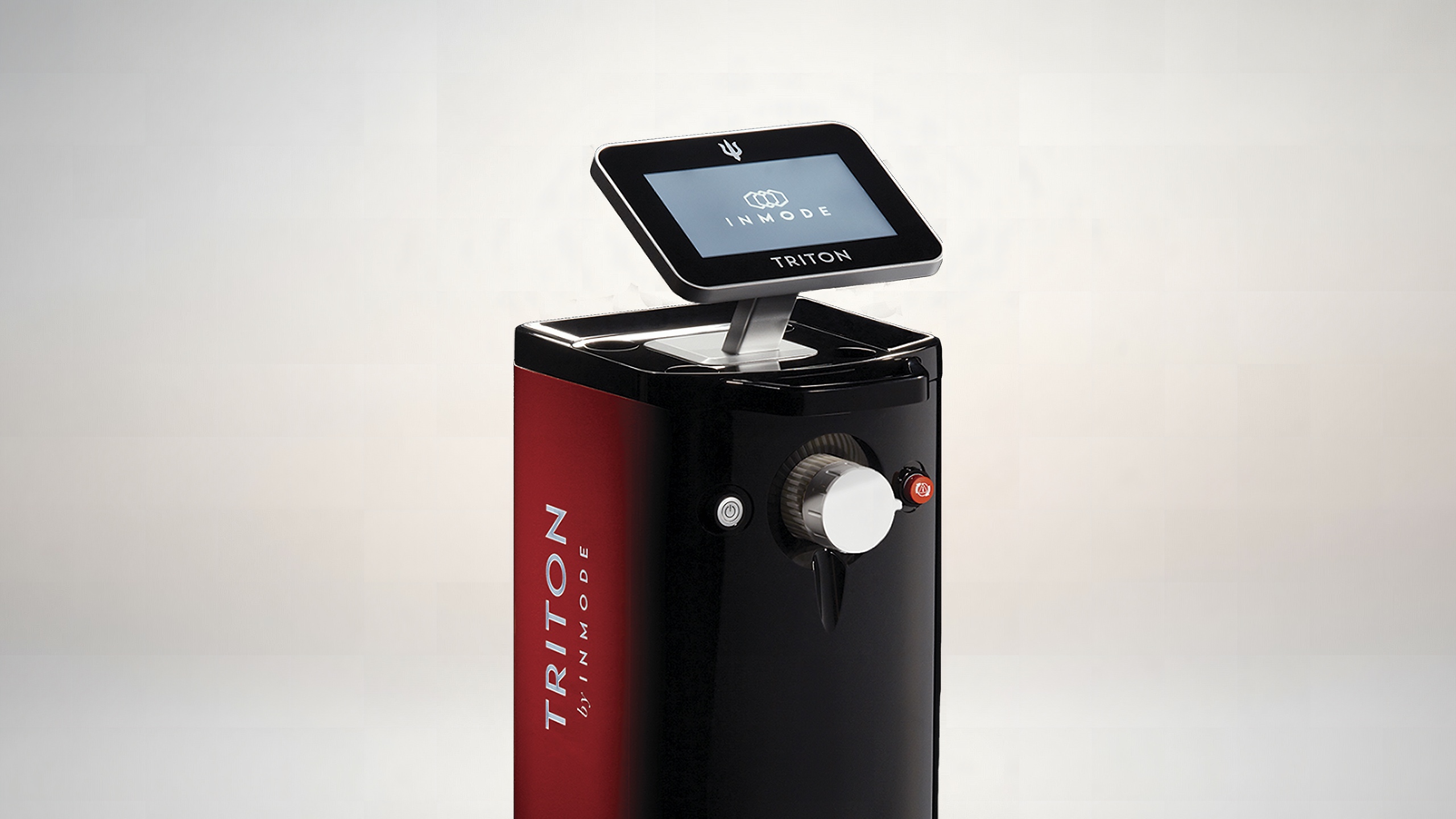
Results also depend on the platform, and at Lumini we treat with Triton by InMode, the first patented multi-wavelength hair-removal workstation. Rather than relying on a single laser, Triton blends the three most-used wavelengths (755 nm alexandrite, 810 nm diode, and 1064 nm Nd:YAG) through its Fusion Technology, reaching hair at different stages of the growth cycle in the same session. Deep and newly emerging follicles are treated together, so you reach your goal in fewer visits.
Two handpieces let us match the treatment to your skin:
- Triton Duo Light (755 + 810 nm) treats a broad range of hair on lighter skin tones.
- Triton Duo Dark (810 + 1064 nm) is built to treat darker skin safely, up to Fitzpatrick type VI, and even works on tanned skin where many devices can’t. Its higher peak power and longer 1064 nm wavelength lower the risk of post-inflammatory hyperpigmentation while staying effective on coarse hair.
Because Triton is safe and effective across every skin tone, it lets us deliver permanent hair reduction for the full diversity of patients we see in Aventura.
What the science says
The need for multiple sessions is rooted in how hair grows and what the research shows lasers can, and can’t, do in a single visit. A 2023 network meta-analysis of 13 randomized controlled trials confirmed that lasers and intense pulsed light safely and effectively reduce unwanted hair, with side effects that were transient and left no permanent scarring.¹ But “effective” doesn’t mean “one-and-done”: a randomized split-site trial found roughly 33–35% hair reduction measured six months after a course of six sessions, because only hairs in their active growth phase respond to each treatment.² This is why a long-term follow-up study of 100 patients reported they typically needed somewhere between about 5 and 10 sessions to reach a result they were satisfied with, and the realistic endpoint is long-lasting reduction and thinning of hair rather than total elimination.³ Device choice matters too: a comprehensive review found the alexandrite, diode, Nd:YAG, and IPL systems all work, with the longer-wavelength Nd:YAG being the safest choice for darker skin tones.⁴ Spacing sessions to catch hairs in their growth cycle is what makes the difference.
References
- Kao YC, et al. Efficacy of Laser in Hair Removal: A Network Meta-analysis. J Cosmet Laser Ther. 2023. PMID: 37493187
- Ayatollahi A, et al. Comparison of efficacy and safety of a novel 755-nm diode laser with conventional 755-nm alexandrite laser in reduction of axillary hairs. Lasers Med Sci. 2020. PMID: 31278429
- Tugba Altunel C, Kartal SP. Reconceptualizing the permanence of alexandrite laser hair removal results: a long-term follow-up study. J Cosmet Laser Ther. 2020. PMID: 34096438
- Gan SD, Graber EM. Laser hair removal: a review. Dermatol Surg. 2013. PMID: 23332016
Medically reviewed by Dr. Thiago Queiroz, D.O., Medical Director, Lumini Medical Spa. Educational, not a substitute for an in-person consultation.