Laser Hair Removal for Darker Skin: Why Wavelength Is Everything
TREATMENTS
Laser Hair Removal for Darker Skin: Why Wavelength Is Everything
For years, people with tan or deep skin tones were quietly told that laser hair removal “wasn’t for them.” That advice is outdated, but the caution behind it wasn’t wrong. Laser hair removal can burn or discolor darker skin when the wrong device is used. The difference between a great result and a bad one comes down to one thing most ads never explain: wavelength. Here’s how it actually works, so you can walk into any consultation knowing what to ask.
How laser hair removal works
A hair-removal laser targets melanin, the pigment in the hair follicle. The energy is absorbed by the pigment in the hair, heats the follicle, and disables its ability to regrow, a principle called selective photothermolysis. The catch: melanin also lives in your skin, not just your hair. In fair skin with dark hair, the contrast is high and the laser easily “finds” the follicle. In darker skin, the surrounding skin holds much more melanin too, so a poorly chosen laser can heat the skin along with the hair, the source of burns and post-treatment pigment changes.
Wavelength is the safety dial
Different laser wavelengths travel to different depths and are absorbed differently by skin melanin. That single property decides who a laser is safe for:
- Alexandrite (755 nm) is strongly absorbed by melanin, excellent, fast results on lighter skin, but higher risk on deep tones.
- Diode (810 nm) sits in the middle, a versatile workhorse across many skin types.
- Nd:YAG (1064 nm) has the longest wavelength, so it’s the least absorbed by surface skin melanin and penetrates deeper to the follicle. That makes it the safest choice for darker skin.
According to PubMed, a foundational review of laser hair removal concluded that the alexandrite, diode, Nd:YAG, and IPL devices all support long-term hair reduction, and specifically that, because of its longer wavelength, the Nd:YAG is the best laser system to use for pigmented skin.¹ This is the single most important fact for anyone with a deeper skin tone.
The evidence in skin of color
This isn’t theory. According to PubMed, a 2025 study of 55 women with Fitzpatrick skin types IV, V, and VI treated with a 1064 nm Nd:YAG laser reported effective hair reduction with no adverse events and no paradoxical hypertrichosis, and found that skin type itself was not a significant factor in outcomes when the laser was set appropriately.² In other words: with the right wavelength and settings, deep skin tones can be treated safely and effectively.
Why a multi-wavelength platform is an advantage
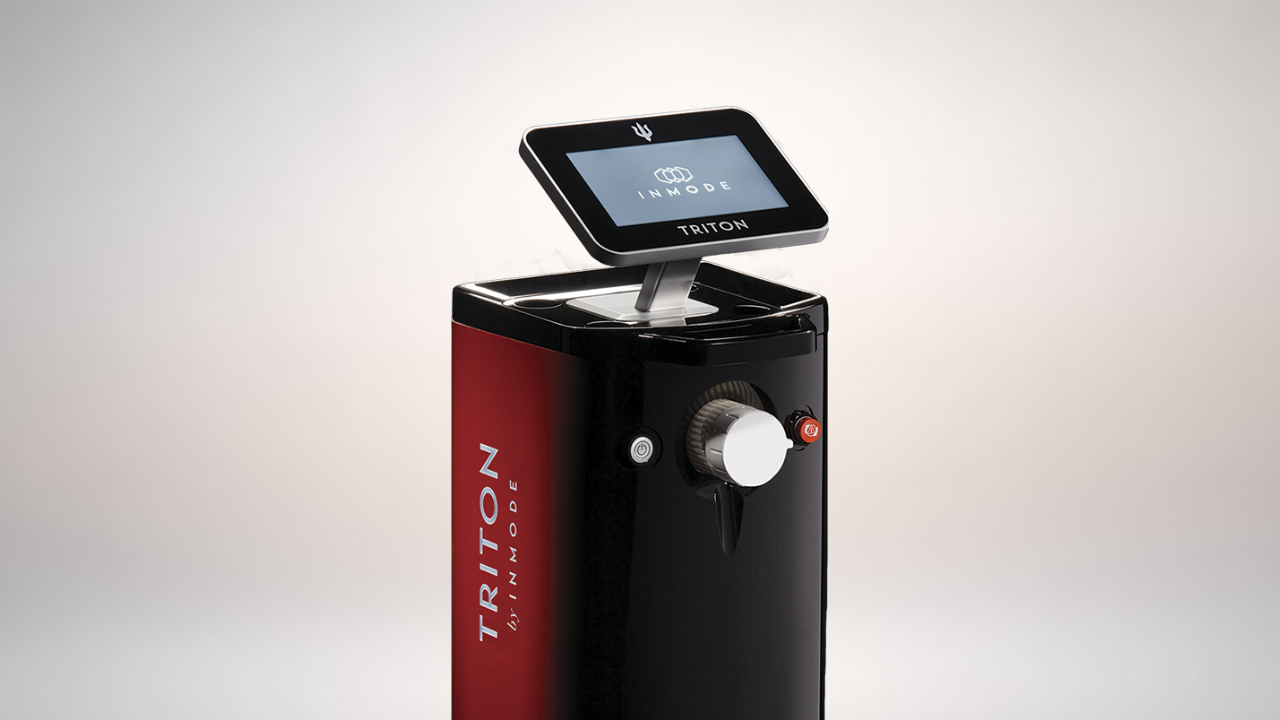
Here’s the practical problem: most people don’t have just one kind of hair, and many don’t fit neatly into one skin category. Coarse hair on the legs, fine hair on the face, lighter skin on the body and a tan on the arms, a single-wavelength device forces a compromise. This is why modern platforms combine wavelengths. At Lumini we use Triton by InMode, which blends multiple clinically proven wavelengths in one system, so we can tailor the treatment to your skin tone and your hair depth in the same session, leaning on the longer, safer wavelengths where your skin needs it. You can see more on our laser hair removal page.
What a safe treatment looks like in practice
Wavelength is the foundation, but good technique carries it: a proper test patch before a full session, conservative energy dialed to your skin type, robust cooling to protect the surface, and realistic spacing between sessions. Hair grows in cycles, so multiple sessions are always needed to catch each follicle in its active phase, this is true for every skin tone. One caution specific to laser work near existing moles: any pigmented lesion is reviewed during the Lumini medical consultation and avoided during treatment unless it has been appropriately cleared, since laser can alter its appearance.³ That screening is part of why medical supervision matters.
Why this matters in Aventura
Aventura and greater Miami are among the most diverse communities in the country, with a large share of Fitzpatrick IV–VI skin. That’s precisely the population that gets turned away or, worse, treated with the wrong device elsewhere. Physician-supervised, multi-wavelength laser hair removal means we don’t have to say “you’re not a candidate”, we adjust the tool to you.
At Lumini Medical Spa (Aventura Mall)
Whatever your skin tone, our medical team will assess your skin type and hair, run a test patch, and build a plan that’s both safe and effective. Laser hair removal is offered for women and men. Pricing is by area, confirmed at your consultation. We treat patients in English, Spanish, and Portuguese, and we serve Aventura, Sunny Isles, Bal Harbour, and North Miami Beach.
Frequently asked questions
Is laser hair removal safe for dark or Black skin? Yes, when the right wavelength is used. According to PubMed, the 1064 nm Nd:YAG laser is considered the best system for pigmented skin because its longer wavelength is less absorbed by skin melanin and penetrates to the follicle.¹ A 2025 study in Fitzpatrick IV–VI skin reported effective reduction with no adverse events.²
Why is the Nd:YAG laser recommended for deeper skin? Its 1064 nm wavelength is the longest of the common hair-removal lasers, so it targets the follicle while sparing the melanin at the skin’s surface, the key to avoiding burns and pigment changes in darker tones.¹
What is the difference between alexandrite, diode, and Nd:YAG? They’re different wavelengths. Alexandrite (755 nm) is highly effective on lighter skin; diode (810 nm) is versatile across many types; Nd:YAG (1064 nm) is the safest for darker skin. A multi-wavelength platform lets a provider tailor the choice to your skin and hair.¹
How many sessions will I need? Multiple, regardless of skin tone, because hair grows in cycles and each session catches follicles in their active phase. The exact number depends on the area and your hair, we estimate it at your consultation.
Does it hurt, and is there downtime? Most people describe a quick snapping sensation, managed with cooling. Downtime is minimal, some redness that settles within a day. Avoid sun and tanning before and after.
Can you treat me if I have a tan? We assess this individually. Because a tan adds melanin to the skin, we may adjust wavelength and energy or ask you to let the tan fade, part of why a test patch and medical assessment come first.
References
- Gan SD, Graber EM. Laser hair removal: a review. Dermatol Surg. 2013. PMID: 23332016. https://doi.org/10.1111/dsu.12116
- Mahmoud EEA, Elbasheer OA, Marouf AAS. Efficacy and safety of 1064 nm Nd:YAG laser for hair removal in Sudanese women: A study on Fitzpatrick skin types IV-VI. Lasers Med Sci. 2025. PMID: 40892306. https://doi.org/10.1007/s10103-025-04606-5
- Cices A, Dover JS, Labadie JG. Changes in melanocytic nevi treated with laser hair removal: A systematic review. Lasers Surg Med. 2023. PMID: 37493510. https://doi.org/10.1002/lsm.23712
Medically reviewed by Dr. Thiago Queiroz, D.O., Medical Director, Lumini Medical Spa. Educational, not a substitute for an in-person consultation. Research summaries via PubMed.