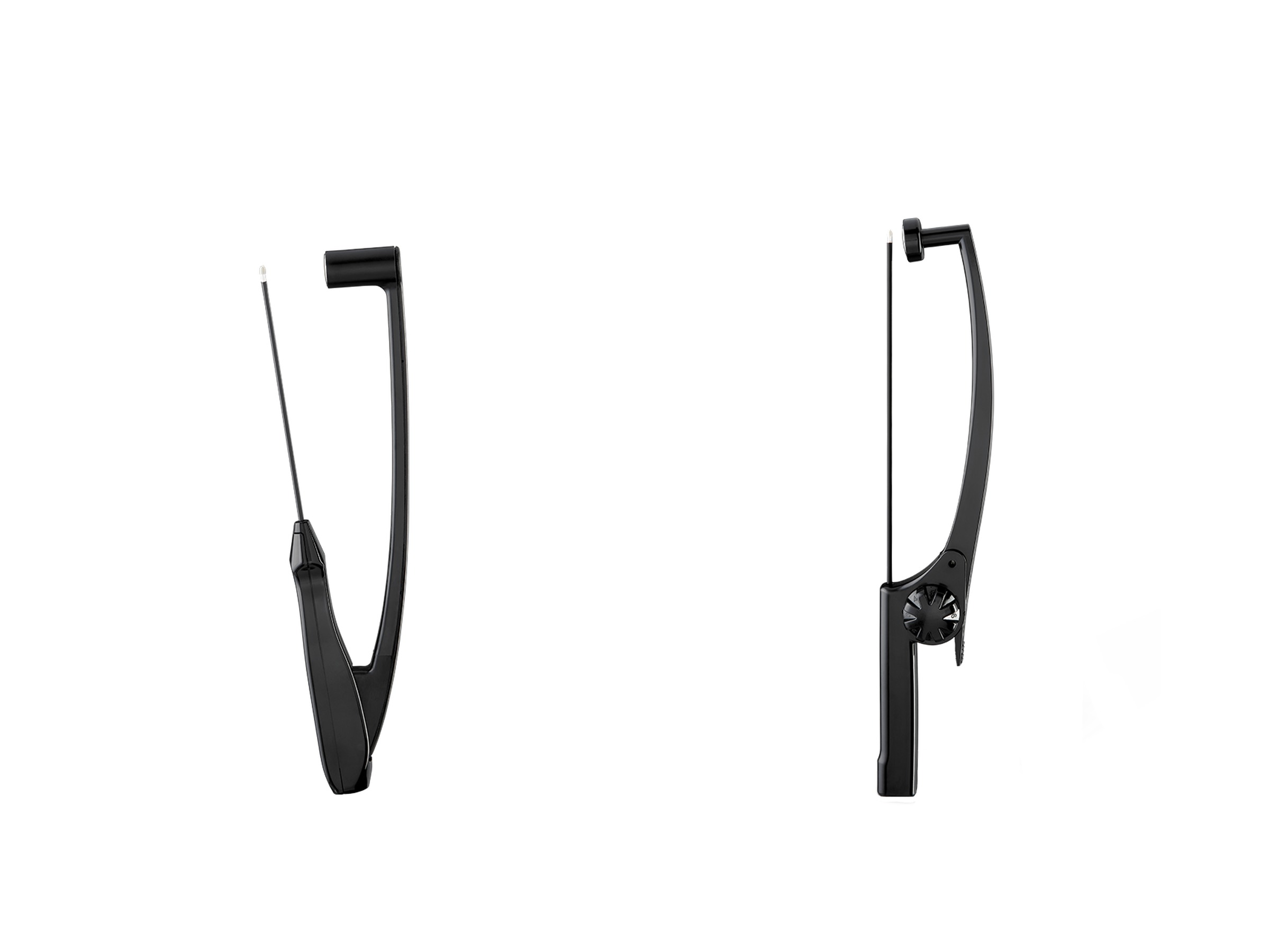
FaceTite & BodyTite: Minimally Invasive Skin Tightening Without Surgery
TREATMENTS
FaceTite & BodyTite: Minimally Invasive Skin Tightening Without Surgery
There’s a frustrating middle ground in skin laxity: you’re past what a cream or surface laser can fix, but not ready for a facelift or tummy tuck with their scars and downtime. FaceTite and BodyTite were built for exactly that gap. They use radiofrequency-assisted lipolysis (RFAL) to tighten skin and refine contours through tiny entry points instead of incisions.⁴ Here’s how it works, how the devices differ, and how it compares to surgery and Morpheus8, backed by the research.
What RFAL actually is
RFAL stands for radiofrequency-assisted lipolysis. It delivers a controlled amount of radiofrequency energy to tissue, which gently liquefies and removes unwanted fat, seals small vessels as it goes, and, the part everyone cares about, tightens the overlying skin.³ That’s what sets it apart from ordinary liposuction, which can leave skin loose: RFAL was developed to close that “treatment gap,” contracting soft tissue while it refines the contour.²
How it works: internal + external radiofrequency
This is the clever part. A thin internal cannula slides just under the skin while a matching electrode rests on the surface, and radiofrequency energy flows between the two through the tissue in between. By precisely controlling depth, power, target temperature, and duration, the device produces measurable contraction of the collagen matrix.¹ As the connective-tissue scaffold under your skin (the fibroseptal network) heats to roughly 40–50°C, it physically contracts, and the heat also kick-starts new collagen, elastin, and blood vessels over the following months.⁴ The result is firmer, better-draped skin, not just less fat.
FaceTite vs. BodyTite vs. AccuTite
All three are part of the same InMode RFAL family and work on the same internal-plus-external radiofrequency principle. The difference is scale and location:
- BodyTite is for the body, abdomen, flanks, arms, thighs, back. In a 97-patient study under local anesthesia, about 82% were satisfied with the skin tightening and 85% with the contour.³
- FaceTite is for the face and neck, the jawline, jowls, and under-chin area. In the largest review of facial RF tightening to date, patients meaningfully improved their neck-and-jaw laxity scores, and 93% said they’d do it again.⁵
- AccuTite is the smallest applicator, made for delicate, precise areas like the lower eyelid region, brows, nasolabial folds, and small pockets of jowl or neck laxity where the larger devices won’t fit.⁶
How it differs from a surgical lift
The honest answer: it doesn’t replace one. A facelift or necklift physically removes excess skin, so for severe sagging, surgery is still the right tool. FaceTite and BodyTite tighten the skin you have rather than cutting it away, less scarring and faster recovery, but a more moderate degree of lift.⁵ They shine for the patient whose laxity isn’t “bad enough” to justify excisional surgery yet is too advanced for surface-only devices to touch.⁴ Choosing the right tool for the degree of laxity is a clinical judgment.
How it differs from Morpheus8
People mix these up because both use radiofrequency, but they work differently and are often used together. Morpheus8 is fractional RF microneedling, tiny needles deliver radiofrequency into the dermis and just below, remodeling skin texture and subdermal fat from within. FaceTite and BodyTite use bulk bipolar RF to contract the deeper fibroseptal network across a whole region. They’re complementary: the microneedling handles subdermal remodeling and surface tightening, while the bipolar RF contracts the underlying scaffold for a stronger lift.⁴ Combining them addresses both the surface and the structure in one plan.
Downtime and results timeline
These are minimally invasive, not non-invasive, and most treatments are done under local anesthesia, no general anesthetic.³ ⁵ Expect some swelling, bruising, and firmness for a few weeks; in the large facial series, prolonged swelling and temporary firm areas were the most common issues and resolved on their own.⁵ You’ll see early tightening as things settle, but the best results build over three to six months as new collagen forms and the tissue keeps contracting, with most people back to everyday activities within a few days.⁴
Is it safe? Who’s a candidate?
RFAL has a well-documented safety profile when performed by trained physicians, with most side effects being temporary swelling or firmness.³ ⁵ The ideal candidate has mild-to-moderate skin laxity with some softness or fullness to refine and wants meaningful tightening without committing to surgery. Interestingly, older patients with more laxity often see a larger improvement than younger ones.⁵ It isn’t for everyone: very loose, heavily sagging skin is better served by surgery. That’s a decision we make together at a consultation, where we assess your skin, anatomy, and goals.
At Lumini Medical Spa (Aventura Mall)
We offer FaceTite, BodyTite, and AccuTite, often paired with Morpheus8, for physician-performed skin tightening and contouring of the face, neck, and body. Pricing is personalized at your consultation, because the right device, areas, and combination depend entirely on your anatomy and goals. Our team treats patients in English, Spanish, and Portuguese, and we serve Aventura, Sunny Isles, Bal Harbour, and North Miami Beach.
Frequently asked questions
Is FaceTite a replacement for a facelift? No. It tightens skin without removing it, so it’s ideal for moderate laxity, not severe sagging, it fills the gap for people who fall between surface devices and surgery.⁴ ⁵
What’s the difference between FaceTite and BodyTite? They’re the same radiofrequency technology in different sizes. FaceTite treats the face and neck, BodyTite treats the body (abdomen, arms, thighs, flanks), and AccuTite handles small, delicate areas.³ ⁵ ⁶
How is this different from Morpheus8? Morpheus8 is fractional RF microneedling that remodels the skin and subdermal layer with tiny needles; FaceTite and BodyTite use bipolar radiofrequency to contract the deeper scaffold. They’re frequently combined for a fuller result.⁴
Is there much downtime? It’s minimally invasive and usually done under local anesthesia. Expect swelling, bruising, and firmness for a few weeks, with most people back to normal activities within a few days.³ ⁵
When will I see results? Some tightening shows early, but the skin continues to firm as new collagen forms, with the best results developing over roughly three to six months.⁴
References
- Paul M, et al. Three-dimensional radiofrequency tissue tightening: a proposed mechanism and applications for body contouring. Aesthetic Plast Surg. 2011. PMID: 20835826. https://pubmed.ncbi.nlm.nih.gov/20835826/
- Theodorou SJ, et al. Soft Tissue Contraction in Body Contouring With Radiofrequency-Assisted Liposuction: A Treatment Gap Solution. Aesthet Surg J. 2018. PMID: 29767716. https://pubmed.ncbi.nlm.nih.gov/29767716/
- Theodorou SJ, et al. Radiofrequency-assisted liposuction device for body contouring: 97 patients under local anesthesia. Aesthetic Plast Surg. 2012. PMID: 22466060. https://pubmed.ncbi.nlm.nih.gov/22466060/
- Dayan E, et al. Adjustable Depth Fractional Radiofrequency Combined With Bipolar Radiofrequency: A Minimally Invasive Combination Treatment for Skin Laxity. Aesthet Surg J. 2019. PMID: 30958550. https://pubmed.ncbi.nlm.nih.gov/30958550/
- Dayan E, et al. Multimodal Radiofrequency Application for Lower Face and Neck Laxity. Plast Reconstr Surg Glob Open. 2020. PMID: 32983756. https://pubmed.ncbi.nlm.nih.gov/32983756/
- Demesh D, et al. The use of radiofrequency-assisted lipolysis with radiofrequency microneedling in premature jowl and neck laxity following facialplasty. J Cosmet Dermatol. 2021. PMID: 33128284. https://pubmed.ncbi.nlm.nih.gov/33128284/
Medically reviewed by Dr. Thiago Queiroz, D.O., Medical Director, Lumini Medical Spa. Educational, not a substitute for an in-person consultation.