Crow’s Feet Botox: What It Treats, What It Cannot Fix, and How to Keep Results Natural
Crow’s Feet Botox: What It Treats, What It Cannot Fix, and How to Keep Results Natural
At Lumini Medical Spa, located within Aventura Mall, our approach to facial rejuvenation is grounded in a deep respect for anatomy and physiology. When patients inquire about treating crow’s feet—the fine lines radiating from the outer corners of the eyes—they often seek a solution that restores a rested appearance without altering their ability to express emotion. Understanding the distinction between dynamic movement and static skin changes is the first step toward achieving natural-looking outcomes. This guide explores the science behind lateral canthal lines, the specific indications for onabotulinumtoxinA, and the realistic expectations necessary for safe, effective treatment.
Understanding Lateral Canthal Lines: Dynamic Versus Static
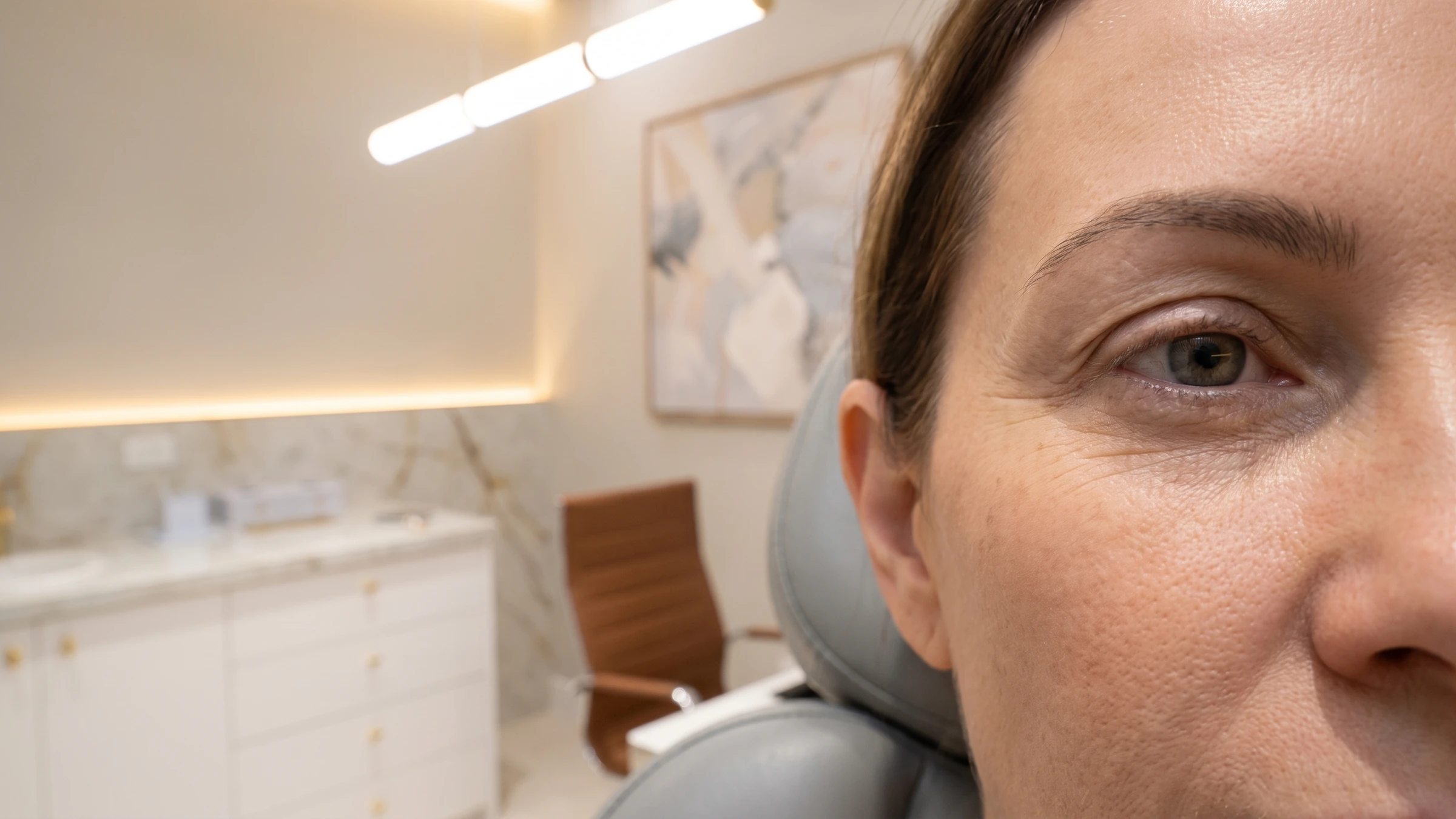
The term “crow’s feet” generally refers to the rhytids (wrinkles) that appear at the lateral canthus, the outer corner of the eye. To plan an effective treatment strategy, it is essential to distinguish between dynamic lines and static lines.
Dynamic lines are created by the repetitive contraction of the orbicularis oculi muscle, the circular muscle surrounding the eye responsible for blinking and squinting. When this muscle contracts, it pulls on the overlying skin, creating temporary folds. These lines appear only during facial expression and disappear when the face is at rest. OnabotulinumtoxinA, commonly known by the brand name Botox, is specifically indicated to temporarily improve the appearance of moderate to severe dynamic crow’s feet in adults.
In contrast, static lines remain visible when the muscle is relaxed. They can reflect a combination of repeated movement, photoaging, changes in collagen and elastin, and the natural aging process. A neuromodulator may soften the dynamic component, but it does not resurface the skin or reliably erase established creases, laxity, pigmentation, or surface roughness.
The Role of the Orbicularis Oculi and Natural Expression
The orbicularis oculi is a complex muscle with distinct functional zones. Its primary role is to protect the eye by closing the eyelids tightly against wind, debris, or bright light. However, it also plays a crucial role in social communication. A natural smile involves the coordinated contraction of the zygomaticus major (lifting the corners of the mouth) and the orbicularis oculi (creating the characteristic crinkling around the eyes).
The goal of treatment at Lumini Medical Spa is not to paralyze this muscle entirely, which would result in a “frozen” or unnatural appearance, but to modulate its activity. By reducing the strength of the contraction, we can soften the depth of the lines that form during expression while preserving enough muscle function for blinking and smiling. This requires a nuanced understanding of individual anatomy. Every patient has a unique pattern of line formation; some have deep vertical lines, others have horizontal ripples, and some exhibit asymmetry where one side is more pronounced than the other.
Planning for natural results involves a conservative approach. We assess the muscle mass, the depth of existing lines, and the patient’s aesthetic goals to determine the appropriate treatment plan. The objective is to achieve a refreshed look that allows the patient to maintain their characteristic expressions without the distraction of deep creases. For more information on how we tailor these treatments, please visit our Botox in Aventura page.
FDA-Approved Indications and Limitations
OnabotulinumtoxinA is a purified protein derived from Clostridium botulinum. It works by blocking the release of acetylcholine, the neurotransmitter responsible for signaling muscle contraction. The U.S. Food and Drug Administration (FDA) has approved onabotulinumtoxinA specifically for the temporary improvement in the appearance of moderate to severe crow’s feet lines in adults.
It is critical to recognize what this approval does not cover. The toxin is not indicated for the treatment of static wrinkles, skin laxity, or volume loss. It cannot tighten sagging skin or restore lost facial fat. Furthermore, it does not treat conditions such as dry eye syndrome, although it can sometimes exacerbate pre-existing dryness if the tear film dynamics are altered.
Patients often ask about the longevity and onset of results. The effects are temporary, and timing varies by individual, product, muscle activity, and treatment plan. The treating clinician should explain when assessment or follow-up is appropriate rather than promising a fixed onset or duration. For those considering different neuromodulators, our guide on Botox vs. Dysport vs. Xeomin offers a comparative overview of available options.
Risks and Safety Considerations Around the Eye
The periorbital region is anatomically complex and highly sensitive. Treatment in this area carries specific risks that must be understood before proceeding, even when it is performed carefully by a qualified professional.
Ptosis: Drooping of the eyelid or brow is a known risk and can temporarily affect appearance or function. Any new eyelid drooping or visual symptom after treatment should be reported promptly to the treating clinician.
Diplopia: Double vision may occur if the toxin affects the extraocular muscles responsible for eye movement. This is typically transient but requires immediate medical attention if it occurs.
Dry Eye and Epiphora: The orbicularis oculi muscle plays a role in pumping tears across the eye surface. Altering its function can sometimes lead to dry eye symptoms or, conversely, excessive tearing (epiphora) due to poor drainage. Patients with pre-existing dry eye conditions should discuss this thoroughly during their consultation.
Asymmetry: Because facial anatomy is rarely perfectly symmetrical, there is a risk of uneven results if the muscle response varies between sides or if injection placement is not precise.
Boxed Warning: The FDA label for onabotulinumtoxinA includes a Boxed Warning regarding the potential for spread of toxin effects. In rare cases, symptoms can occur hours to weeks after injection, including loss of strength, generalized muscle weakness, double vision, blurred vision, drooping eyelids, hoarseness, trouble speaking, difficulty swallowing, or breathing problems. These symptoms may be life-threatening if they affect the muscles used for breathing or swallowing.
Contraindications and Precautions
It is vital to distinguish between contraindications—conditions where treatment should not be performed—and precautions, which require careful consideration. OnabotulinumtoxinA is contraindicated in patients with a known hypersensitivity to any component of the formulation or to botulinum toxin type A. It is also contraindicated in patients with an infection at the proposed injection site(s).
Precautions include use in patients with neuromuscular disorders (such as amyotrophic lateral sclerosis, myasthenia gravis, or Lambert-Eaton syndrome), as these individuals may be more susceptible to the effects of the toxin. Additionally, caution is advised for patients who have had previous surgery in the treatment area or those taking certain medications that may interact with neuromuscular transmission. A thorough medical history review is mandatory before any procedure to ensure safety.
Alternatives and Sequencing for Comprehensive Care
Because onabotulinumtoxinA addresses dynamic muscle activity, patients seeking improvement in static lines, skin texture, or volume loss may need to evaluate different modalities. At Lumini Medical Spa, sequencing is discussed only when more than one treatment is appropriate for the patient’s concerns.
For example, a neuromodulator may address dynamic muscle activity, while an energy-based treatment may be considered for a different skin concern. Our Fotona SmoothEye page explains one periocular option. Suitability, expected benefit, recovery, and sequencing are individualized; combining treatments does not guarantee a better result.
Dermal fillers may also be considered for volume loss in the tear trough or under-eye area, but these must be approached with extreme caution due to the vascular anatomy of the region. A comprehensive assessment allows us to determine if a combination of neuromodulators, energy-based devices, and topical skincare is the most appropriate path for your goals.
Cost Considerations
The cost of treatment varies based on the individualized plan. At Lumini Medical Spa, Botox is priced at $18 per unit. The total is confirmed after evaluation of the anatomy, muscle activity, treatment area and goals. There are no guarantees regarding the final aesthetic outcome because biological responses differ.
Frequently Asked Questions
1. Will Botox make my eyes look frozen or unnatural?
The goal is to soften dynamic lines while preserving natural expression, but no injector can guarantee an identical response for every patient. Planning is individualized according to anatomy, muscle activity, product information, and the patient’s goals.
2. How long does it take to see results for crow’s feet?
Onset varies by individual and the effect develops gradually rather than immediately. The clinician will explain when assessment or follow-up is appropriate for the plan used.
3. Can Botox remove deep, etched wrinkles that are visible when I am not smiling?
Botox is designed to treat dynamic lines caused by muscle movement. It may soften the dynamic component, but it does not erase static wrinkles or improve skin texture on its own.
4. Is the treatment painful?
The injections are performed with a fine needle, but sensation and comfort vary by patient and treatment plan.
5. What is the recovery time after treatment?
Recovery is generally limited, but bruising, swelling or other injection-site effects can occur. Follow the instructions issued for the treatment performed and review our Injectable Pre-Aftercare Guide rather than relying on a universal aftercare timeline.
6. Can I combine Botox with other treatments like lasers or fillers?
Possibly. Different modalities address different anatomical concerns, but a combination is not automatically appropriate or superior. Any sequence should be based on an individualized assessment, product information, recovery considerations, and the patient’s goals.
7. How often do I need to return for maintenance?
The effects of Botox are temporary. Muscle activity gradually returns, and any decision about maintenance should be individualized rather than assigned to a universal interval.
References
- U.S. Food and Drug Administration. BOTOX Cosmetic (onabotulinumtoxinA) Prescribing Information. Revised October 2024. https://www.accessdata.fda.gov/drugsatfda_docs/label/2024/103000s5316s5319s5323s5326s5331lbl.pdf
- Brin MF, De Boulle K, Liew S, et al. Safety and tolerability of onabotulinumtoxinA in the treatment of upper facial lines from global registration studies in 5,298 participants: a meta-analysis. JAAD International. 2024;14:4-18. PMID: 38035126. https://pubmed.ncbi.nlm.nih.gov/38035126/
- Jia Z, Lu H, Yang X, et al. Adverse events of botulinum toxin type A in facial rejuvenation: a systematic review and meta-analysis. Aesthetic Plastic Surgery. 2016;40(5):769-777. PMID: 27495260. https://pubmed.ncbi.nlm.nih.gov/27495260/
- Carruthers A, Carruthers J, De Boulle K, et al. Treatment of crow’s feet lines and forehead lines with Botox (onabotulinumtoxinA): development, insights, and impact. Medicine. 2023;102(S1):e32496. PMID: 37499083. https://pubmed.ncbi.nlm.nih.gov/37499083/
- Erickson BP, Lee WW, Cohen J, Grunebaum LD. The role of neurotoxins in the periorbital and midfacial areas. Facial Plastic Surgery Clinics of North America. 2015;23(2):243-255. PMID: 25921574. https://pubmed.ncbi.nlm.nih.gov/25921574/
- Cavallini M, Papagni M, Augelli F, et al. Heterogeneous crow’s feet line patterns and customized botulinum toxin rejuvenating treatment. Journal of Cosmetic Dermatology. 2022;21(10):4294-4300. PMID: 35723939. https://pubmed.ncbi.nlm.nih.gov/35723939/
- Yi KH, Lee JH, Kim GY, et al. Novel anatomical proposal for botulinum neurotoxin injection targeting lateral canthal rhytids. Toxins. 2022;14(7):462. PMID: 35878200. https://pubmed.ncbi.nlm.nih.gov/35878200/
Medically reviewed by Dr. Queiroz, D.O., Medical Director, Lumini Medical Spa. Educational information only. It does not replace an in-person assessment. Individual results vary.