Broken Capillaries and Facial Redness: What Laser Can Treat, and When It Is Rosacea
Broken Capillaries and Facial Redness: What Laser Can Treat, and When It Is Rosacea
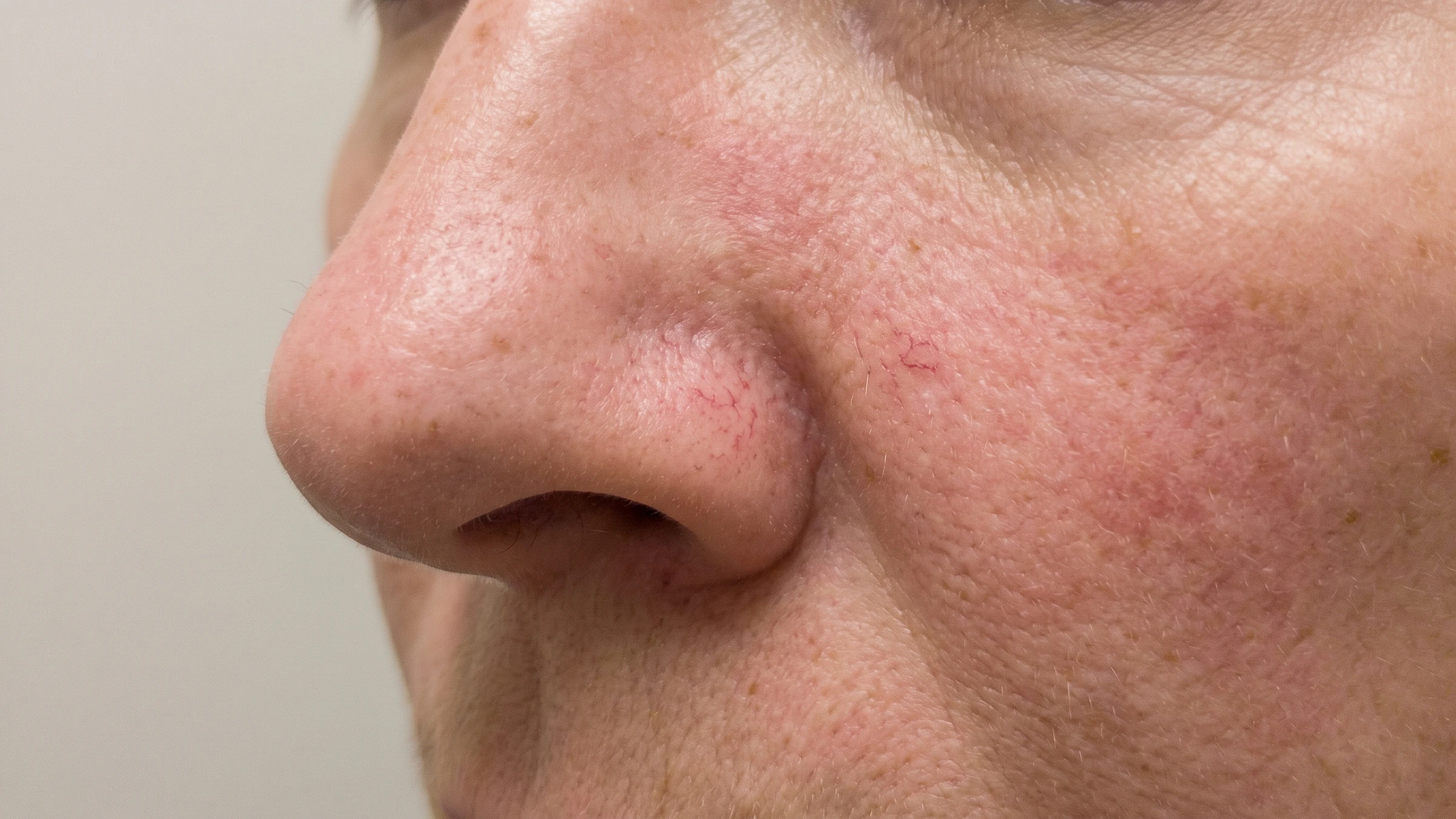
Fine red lines at the side of the nose. A flush across the cheeks that makeup never fully covers. “Broken capillaries” is the everyday name for these small visible vessels, and facial redness is one of the most common concerns we see in Aventura, where sun exposure is a year-round fact.
Lasers can make visible vessels and persistent redness less noticeable. They are not, however, a cure for every cause of a red face, and the cause matters more than the device. This guide explains what broken capillaries are, how they relate to rosacea, what vascular laser treatment can and cannot do according to the evidence, and which signs mean you should see a physician before booking a cosmetic treatment.
1. What “broken capillaries” actually are
The vessels are not literally broken. The medical term is telangiectasia: small blood vessels near the skin surface that have become permanently widened, so they show as fine red or purple lines. On the face, they usually appear on the cheeks, around the nose and on the chin.
Common contributors include:
- cumulative sun exposure and sun damage
- family tendency and fair skin, although telangiectasias occur in all skin types
- aging skin that has become thinner
- rosacea
- skin injury, and long-term use of strong topical corticosteroids on the face
A widened vessel does not usually shrink back on its own. Gentle skincare and sun protection help prevent new ones, but they do not close an existing vessel.
2. Redness that comes and goes, and redness that stays
It helps to separate three patterns, because they respond differently:
| Pattern | What it looks like | What usually helps |
|---|---|---|
| Visible vessels (telangiectasia) | Distinct fine red lines | Vascular laser treatment can target the vessel |
| Persistent background redness | Diffuse redness across the center of the face | Vascular laser may reduce it, sometimes alongside medical treatment |
| Flushing and bumps | Episodes of flushing, burning, red bumps or pustules | Usually medical treatment first, guided by a physician |
Persistent redness of the central face is one of the features that can define rosacea. Under the current phenotype approach endorsed by the National Rosacea Society Expert Committee and the global ROSCO panel, rosacea is described by the features a person actually has (persistent redness, flushing, visible vessels, bumps and pustules, thickening of the skin, eye involvement), and each feature is treated on its own terms.
3. When redness needs a physician, not a laser appointment
Rosacea is a chronic inflammatory skin condition, and a laser treats some of its signs, not the condition itself. See a physician or dermatologist first if you have:
- red bumps or pustules, burning or stinging, or redness that flares easily
- dry, gritty, irritated or red eyes, or swollen eyelids, which can be ocular rosacea and should be assessed by an eye care professional
- thickening or enlargement of the skin on the nose
- a rash across the cheeks and nose together with joint pain, fatigue or sun sensitivity
- flushing together with other symptoms such as diarrhea, wheezing or palpitations
- many new vessels appearing over a short time, or new vessels on the chest along with other symptoms
These can point to conditions that need diagnosis and medical treatment. A cosmetic laser session is not the right first step.
4. What vascular laser treatment can do
Vascular lasers work by selective heating. Hemoglobin inside the vessel absorbs the light, the vessel is heated and sealed, and the body gradually clears it over the following weeks while the surrounding skin is protected by cooling and correct settings.
The technology we use is the long-pulsed 1064 nm Nd:YAG laser, a longer wavelength that reaches deeper and is less absorbed by the skin’s pigment. In split-face studies, Nd:YAG improved rosacea-related nasal vessels, responding especially well in thicker, dilated vessels, and was effective in erythemato-telangiectatic rosacea after three sessions. A 2021 systematic review notes that the overall quality of evidence for laser and light treatments in rosacea is low to moderate.
Two honest qualifications apply:
- Several sessions are usually needed, typically spaced a few weeks apart.
- Results are not permanent protection. Treated vessels are cleared, but new ones can form, especially with ongoing sun exposure or active rosacea. Many people plan occasional maintenance.
For rosacea, published consensus recommendations treat lasers and light as one part of a plan that may also include prescription topical or oral treatment, trigger management and sun protection. Lasers do not treat the papules and pustules of rosacea.
5. Skin tone and safety
Facial redness and rosacea occur in all skin types, and they can be harder to see, and easier to miss, in medium-to-deep skin. Wavelength choice matters: the longer 1064 nm wavelength is less absorbed by melanin, which is one reason it is often chosen for darker skin. No setting removes the risk entirely, so an in-person assessment of skin type and history comes first.
Expected effects after a vascular treatment include temporary redness, swelling and warmth. Bruising can occur. Less common risks include blistering, pigment change and scarring. Recent sun exposure or a tan increases risk; tell your clinician about any history of cold sores, recent retinoid or isotretinoin use, and medications that affect bleeding or photosensitivity.
6. Everyday habits that help
These do not close existing vessels, but they help limit new redness and protect results:
- Daily broad-spectrum sunscreen, reapplied outdoors. In Miami this is the single most useful habit; mineral formulas are often better tolerated by sensitive skin.
- Know your triggers. Sun, heat, hot drinks, alcohol and spicy foods are commonly reported rosacea triggers, though they vary between people.
- Be gentle. Avoid harsh scrubs, very hot water and products that sting. Do not use strong topical steroids on the face unless a physician directs it.
- Do not self-treat with peels or at-home devices while skin is inflamed.
7. At Lumini Medical Spa (Aventura Mall)
At Lumini, Fotona vein and redness removal uses the 1064 nm Nd:YAG wavelength of our Fotona SP Dynamis platform. Treatment begins with an assessment under the supervision of our Medical Director: we look at the type of redness, the size and depth of the vessels, your skin type and whether features suggest rosacea or another condition that should be managed medically first. When that is the case, we say so and refer appropriately.
We do not claim that one device suits everyone. If isolated red dots are your main concern, read our guide to cherry angiomas and skin tags. For brown spots and uneven tone, see melasma and dark spots. For visible veins on the legs, see sclerotherapy for spider veins, and for protecting results in our climate, our Miami summer skincare guide.
We do not quote prices or session counts before an examination. Pricing is personalized at your consultation.
8. Frequently asked questions
Do broken capillaries go away on their own?
Usually not. A permanently widened vessel tends to stay visible. Sun protection helps prevent new ones, and vascular laser treatment can reduce the appearance of existing ones.
Is facial redness always rosacea?
No. Sun damage, irritation, dermatitis, flushing from other causes and some systemic conditions can all cause redness. Rosacea is a clinical diagnosis made by examining the pattern of features, which is why an assessment comes before treatment.
Can a laser cure rosacea?
No. Vascular laser treatment can reduce visible vessels and persistent redness, but rosacea is a chronic condition. Bumps, pustules, burning and eye symptoms usually need medical treatment, and new redness can return over time.
How many sessions will I need?
It depends on the type and extent of the redness. Studies typically used several sessions spaced weeks apart. An examination is needed before estimating a plan, and no number of sessions guarantees complete clearance.
Will I bruise after treatment?
It can happen, depending on the vessels treated and the settings used. Temporary redness and swelling are common after vascular laser treatment. Your clinician should explain what to expect for your specific plan.
Is laser treatment for redness safe for darker skin?
It can be, with appropriate wavelength choice, settings and cooling. The 1064 nm wavelength is less absorbed by melanin, but pigment change remains possible, so suitability is assessed in person.
9. References
- Gallo RL, et al. Standard classification and pathophysiology of rosacea: The 2017 update by the National Rosacea Society Expert Committee. Journal of the American Academy of Dermatology. 2018. PMID: 29089180. https://pubmed.ncbi.nlm.nih.gov/29089180/
- Schaller M, et al. Recommendations for rosacea diagnosis, classification and management: update from the global ROSacea COnsensus 2019 panel. British Journal of Dermatology. 2020. PMID: 31392722. https://pubmed.ncbi.nlm.nih.gov/31392722/
- Husein-ElAhmed H, Steinhoff M. Laser and light-based therapies in the management of rosacea: an updated systematic review. Lasers in Medical Science. 2021;36(6):1151–1160. PMID: 33389310. https://pubmed.ncbi.nlm.nih.gov/33389310/
- Kwon WJ, et al. Comparison of efficacy between long-pulsed Nd:YAG laser and pulsed dye laser to treat rosacea-associated nasal telangiectasia. Journal of Cosmetic and Laser Therapy. 2018;20(5):260–264. PMID: 29388843. https://pubmed.ncbi.nlm.nih.gov/29388843/
- Salem SA, et al. Neodymium-yttrium aluminum garnet laser versus pulsed dye laser in erythemato-telangiectatic rosacea. Journal of Cosmetic Dermatology. 2013;12(3):187–194. PMID: 23992160. https://pubmed.ncbi.nlm.nih.gov/23992160/
- Thiboutot D, et al. Standard management options for rosacea: The 2019 update by the National Rosacea Society Expert Committee. Journal of the American Academy of Dermatology. 2020. PMID: 32035944. https://pubmed.ncbi.nlm.nih.gov/32035944/
- American Academy of Dermatology. Lasers and lights: How well do they treat rosacea? https://www.aad.org/public/diseases/rosacea/treatment/lasers-lights
- National Rosacea Society. All About Rosacea. https://www.rosacea.org/patients/all-about-rosacea
Medically reviewed by Dr. Caio Trentin, M.D., review date 2026-10-23. Educational information only. It does not replace an in-person assessment. Individual results vary.