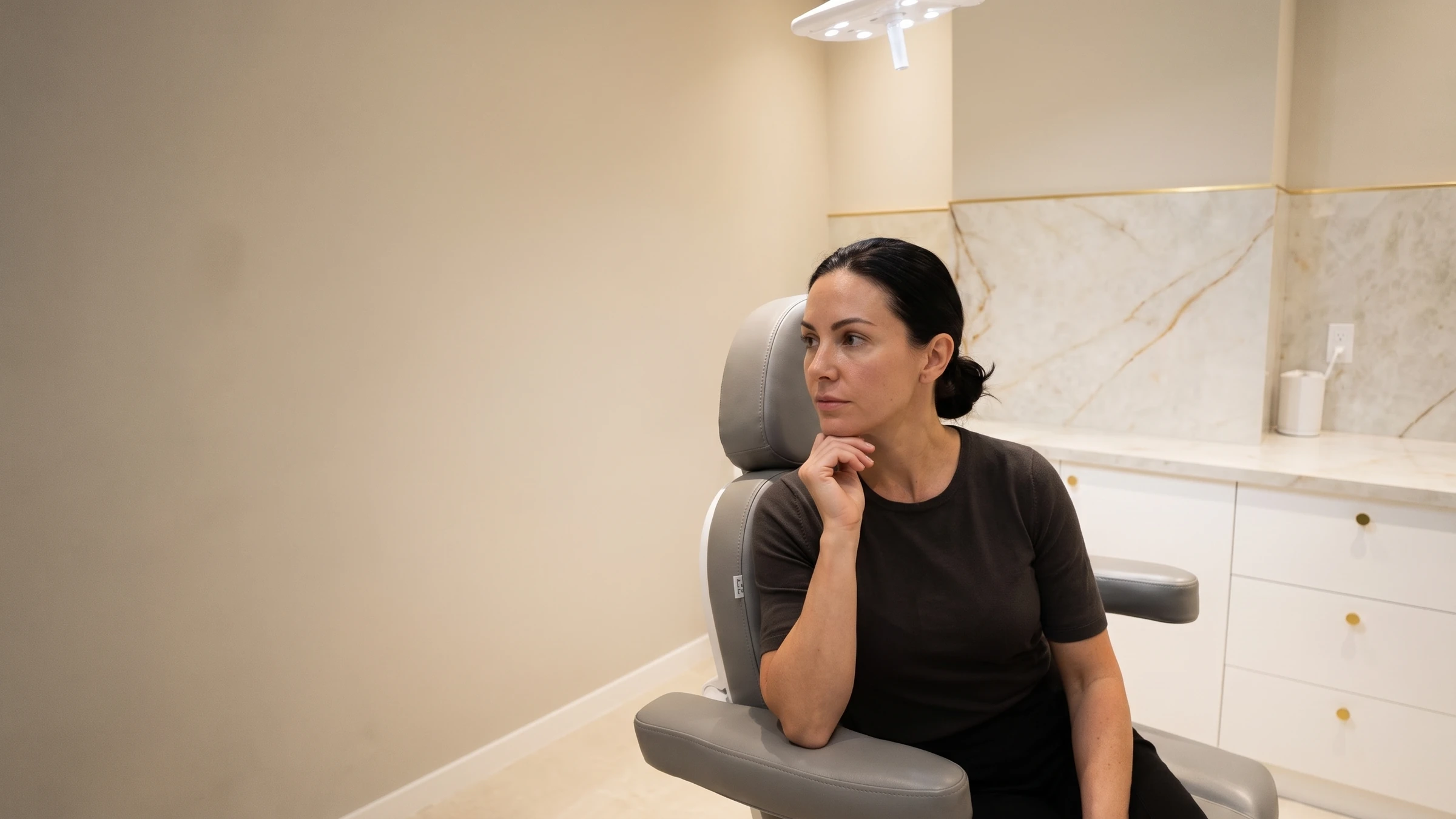
Facial Laser Hair Removal: Upper Lip, Chin & Hormonal Hair Growth
What facial laser hair removal can reduce, why hormonal growth behaves differently, and how skin tone and hair type shape a safe plan.
Facial Laser Hair Removal: Upper Lip, Chin & Hormonal Hair Growth
Facial laser hair removal can produce long-term reduction of dark, coarse hair on areas such as the upper lip, chin, jawline and sideburns. It does not guarantee that every hair will disappear permanently. Facial hair is strongly influenced by hair color, skin tone, growth cycle and hormones, so a treatment plan usually involves a series of sessions and may require maintenance.
Laser treatment works best when the hair contains enough pigment to absorb light. Blonde, red, white and gray hairs respond poorly because they contain little target pigment. Fine facial “peach fuzz” also requires careful assessment: treating hair that is too light or too fine may offer little benefit and, uncommonly, facial or neck laser treatment can stimulate additional hair growth instead of reducing it.
What facial laser hair removal can treat
Common facial treatment areas include:
- the upper lip;
- the chin and the area immediately beneath it;
- the jawline and upper neck;
- the sideburns and lateral cheeks; and
- selected coarse hairs elsewhere on the face.
The correct treatment boundary matters. A clinician should distinguish coarse terminal hair from fine vellus hair and decide whether the surrounding area should be treated or avoided. The goal is not to expose every visible hair to laser energy. It is to select hair that is likely to respond while protecting the skin and reducing unnecessary exposure.
How laser hair reduction works
Hair-removal lasers use selective photothermolysis. Light is absorbed by pigment in the hair and converted to heat, which damages structures involved in hair production while limiting injury to surrounding skin. The balance depends on wavelength, pulse duration, energy, cooling, skin pigmentation, hair thickness and treatment technique.
Only a portion of follicles are in the most responsive growth phase at any one time. That is why one session cannot treat every future hair. Sessions are spaced so that additional follicles can enter a treatable phase. The visible pattern is usually progressive: fewer hairs return, regrowth becomes slower and many remaining hairs become finer.
The evidence supports describing the outcome as long-term hair reduction, not guaranteed complete removal. A 2022 systematic review found meaningful long-term reduction with alexandrite, diode and Nd:YAG lasers, but results varied substantially and facial hair showed lower long-term reduction than several body sites.
Why the upper lip and chin behave differently from body hair
Facial hair has a shorter growth cycle than hair on many body areas and is more sensitive to hormonal signaling. The upper lip may contain a mix of coarse terminal hairs and very fine hairs. The chin and jawline more often contain scattered coarse hairs, especially when androgen activity contributes to growth.
These differences affect both response and scheduling. A plan for the face should not simply copy the settings or intervals used for the legs or underarms. The clinician evaluates the density, diameter and color of the hair, the background skin tone, tanning history and any tendency toward pigmentation.
Hormonal facial hair and PCOS
Laser can reduce visible facial hair associated with polycystic ovary syndrome (PCOS) or another source of androgen-driven growth, but it does not diagnose or treat the hormonal cause. New follicles may continue to become active while the underlying signal persists. This can mean more sessions, slower progress or periodic maintenance compared with hair that is not hormonally driven.
A 2024 systematic review of laser and light treatment for PCOS-related hirsutism included six studies and 423 participants. The studies generally supported improvement, but the authors rated the overall certainty of the evidence as limited because the treatment methods and outcome measures differed and data for skin of color were sparse. Some included studies found better outcomes when hair reduction was combined with medical management of PCOS.
Rapidly increasing facial hair, irregular menstrual cycles, scalp hair thinning, new severe acne or other signs of androgen excess should not be treated as a cosmetic issue alone. Medical evaluation can identify whether hormonal assessment or treatment should accompany laser hair reduction. Laser manages the hair that is present; it does not replace that evaluation.
Does facial laser hair removal work on every skin tone?
Laser hair reduction can be performed across a wide range of skin tones, but the wavelength and settings must be selected for the individual. Skin melanin competes with hair pigment for laser energy. With deeper or recently tanned skin, inappropriate parameters can increase the risk of burns and pigment changes.
Long-pulsed 1064 nm Nd:YAG has been studied extensively in darker skin types because it is less strongly absorbed by surface melanin than shorter wavelengths. Studies in Fitzpatrick skin types IV through VI have reported meaningful hair reduction with mostly temporary adverse effects, but outcomes vary and conservative selection of parameters remains important.
At Lumini, facial laser hair removal is planned with the Triton multi-wavelength platform. Skin type, current tan, hair depth and hair thickness guide wavelength and setting selection; the device does not replace clinical assessment.
Who is most likely to respond
The strongest candidates generally have pigmented, coarse hair that is visibly darker than the surrounding skin. Response becomes less predictable as the hair becomes finer or lighter.
Laser is not a good match for every hair:
- White, gray, light blonde and many red hairs contain too little target pigment for reliable laser reduction.
- Very fine vellus hair may not absorb enough energy to justify treatment.
- Active tanning increases competing pigment in the skin and may require postponement.
- A history of pigment change, photosensitivity, certain medications or a recent skin reaction may change the plan.
- Tattoos, suspicious pigmented lesions and the eye area require strict avoidance or additional precautions.
Electrolysis may be considered for isolated light hairs that cannot be targeted effectively with laser. The choice depends on hair number, color, area and tolerance for a follicle-by-follicle treatment.
How many sessions are needed?
Most patients need a series rather than a single treatment. A series is common, but the number is individualized; the provider reassesses the remaining hair and whether maintenance is appropriate. The exact number cannot be predicted from a photograph or sold as a guarantee.
Hormonal stimulation, hair density, treatment area, skin type, wavelength selection and adherence to the schedule all affect the course. Chin or jawline hair associated with PCOS may require ongoing maintenance even after a meaningful initial reduction. A good endpoint may be much less hair, slower regrowth and easier management rather than a completely hair-free face.
How to prepare for treatment
- Shave the treatment area as instructed, commonly about 24 hours before the appointment.
- Do not wax, tweeze, thread or use an epilator during the weeks before treatment because the follicular target must remain present.
- Avoid tanning and disclose recent sun exposure or self-tanner.
- Bring a current medication and supplement list, including products that may increase photosensitivity.
- Arrive without makeup, fragranced products or active skincare on the treatment area when instructed.
- Disclose a history of cold sores when treatment is planned close to the lips.
Do not use an at-home light device or attempt to “test” the area immediately before a professional appointment. Preparation instructions may change according to skin condition and treatment history.
What treatment and recovery feel like
During treatment, protective eyewear is mandatory. Cooling helps protect the skin surface and improve comfort. Patients often describe quick warm snaps. The upper lip can feel more sensitive than larger body areas because it has dense sensory innervation and is treated close to the nose and mouth.
Temporary redness and perifollicular swelling can occur and often settle within hours. The treated hairs do not necessarily disappear immediately; they may shed gradually over the following days. Patients should use gentle skincare, avoid picking and follow sun-protection and heat-exposure instructions.
Increasing pain, blistering, crusting or a persistent pigment change should be reported promptly. These findings are not expected routine “proof” that the treatment worked.
Risks specific to facial treatment
Potential adverse effects include pain, redness, swelling, burns, blistering, temporary or persistent hyperpigmentation or hypopigmentation, folliculitis and incomplete response. Eye injury is a preventable risk when laser safety protocols are not followed.
Paradoxical hypertrichosis means increased hair growth after laser or light-based hair removal. A 2021 systematic review and meta-analysis estimated a pooled prevalence of about 3%, with substantial variation among studies. The association was concentrated on the face and neck and was rare on non-facial sites. The exact mechanism and individual risk are not fully understood.
This risk is one reason Lumini does not treat facial “peach fuzz” automatically. Hair type, treatment boundary and parameters must be considered before proceeding. More treatment is not always better.
Facial laser hair removal at Lumini
Lumini Medical Spa performs physician-supervised laser hair removal inside Aventura Mall. The consultation evaluates facial hair pattern, skin tone, tanning history, previous laser response and whether the growth pattern suggests a medical assessment should accompany treatment.
Patients can review our laser hair removal treatment page, guide for darker skin tones, Triton technology page and current pricing before scheduling. Contact Lumini to arrange an evaluation in Aventura.
Frequently asked questions
Is facial laser hair removal permanent?
The appropriate expectation is long-term hair reduction, not a guarantee that every hair will disappear forever. Many treated hairs stop returning or become finer, but new or previously inactive follicles may become visible later, particularly when hormonal stimulation is present.
Can laser remove upper-lip hair?
Yes, when the hair contains enough pigment and is thick enough to absorb laser energy. Very light or fine upper-lip hair may respond poorly, so the area should be assessed before treatment.
Does laser hair removal work on chin hair caused by PCOS?
It can meaningfully reduce visible coarse hair, but it does not treat PCOS or stop the hormonal signal that can activate additional follicles. Patients may need more sessions or maintenance, and medical management may improve overall control.
Can I shave my face between sessions?
Shaving is generally compatible with laser treatment because it leaves the follicular target beneath the skin. Waxing, tweezing, threading and epilating remove that target and are usually avoided during the treatment series.
Will laser make facial hair grow back thicker?
Most suitable hair becomes reduced or finer. A recognized uncommon complication called paradoxical hypertrichosis can cause increased growth, especially on the face or neck. Careful selection of hair type, treatment area and settings is important.
Is facial laser hair removal safe for darker skin?
It can be, when the wavelength, energy, pulse duration and cooling are selected for the patient’s skin and hair. Deeper or tanned skin requires particular attention because surface melanin can absorb laser energy and increase the risk of pigment change or burns.
How many facial laser sessions will I need?
A series is common, but the number is individualized. Hormonal hair, facial growth cycles, density, skin type and response to each session determine whether additional or maintenance treatments are appropriate.
Does facial laser hair removal hurt?
Most patients describe brief warm snaps. The upper lip may feel more sensitive than other areas. Cooling and individualized settings help manage comfort while protecting the skin.
References
- Gan SD, Graber EM. Laser hair removal: a review. Dermatologic Surgery. 2013;39(6):823-838. PMID: 23332016. https://pubmed.ncbi.nlm.nih.gov/23332016/
- Liew SH. Laser hair removal: guidelines for management. American Journal of Clinical Dermatology. 2002;3(2):107-115. PMID: 11893222. https://pubmed.ncbi.nlm.nih.gov/11893222/
- Rao K, Sankar TK. Long-pulsed Nd:YAG laser-assisted hair removal in Fitzpatrick skin types IV-VI. Lasers in Medical Science. 2011;26(5):623-626. PMID: 21519944. https://pubmed.ncbi.nlm.nih.gov/21519944/
- Tan K, Coster T, Mousa A, et al. Laser and light-based therapies for hirsutism management in women with polycystic ovary syndrome: a systematic review. JAMA Dermatology. 2024;160(7):746-757. PMID: 38630483. https://pubmed.ncbi.nlm.nih.gov/38630483/
- Clayton WJ, Lipton M, Elford J, et al. A randomized controlled trial of laser treatment among hirsute women with polycystic ovary syndrome. British Journal of Dermatology. 2005;152(5):986-992. PMID: 15888157. https://pubmed.ncbi.nlm.nih.gov/15888157/
- Krasniqi A, McClurg DP, Gillespie KJ, Rajpara S. Efficacy of lasers and light sources in long-term hair reduction: a systematic review. Journal of Cosmetic and Laser Therapy. 2022;24(1-5):1-8. PMID: 35634805. https://pubmed.ncbi.nlm.nih.gov/35634805/
- Snast I, Kaftory R, Lapidoth M, Levi A. Paradoxical hypertrichosis associated with laser and light therapy for hair removal: a systematic review and meta-analysis. American Journal of Clinical Dermatology. 2021;22(5):615-624. PMID: 34057666. https://pubmed.ncbi.nlm.nih.gov/34057666/ Medically reviewed by Dr. Caio Trentin, MD, Physician, Lumini Medical Spa. Educational information only. It does not replace an in-person assessment. Individual results vary.