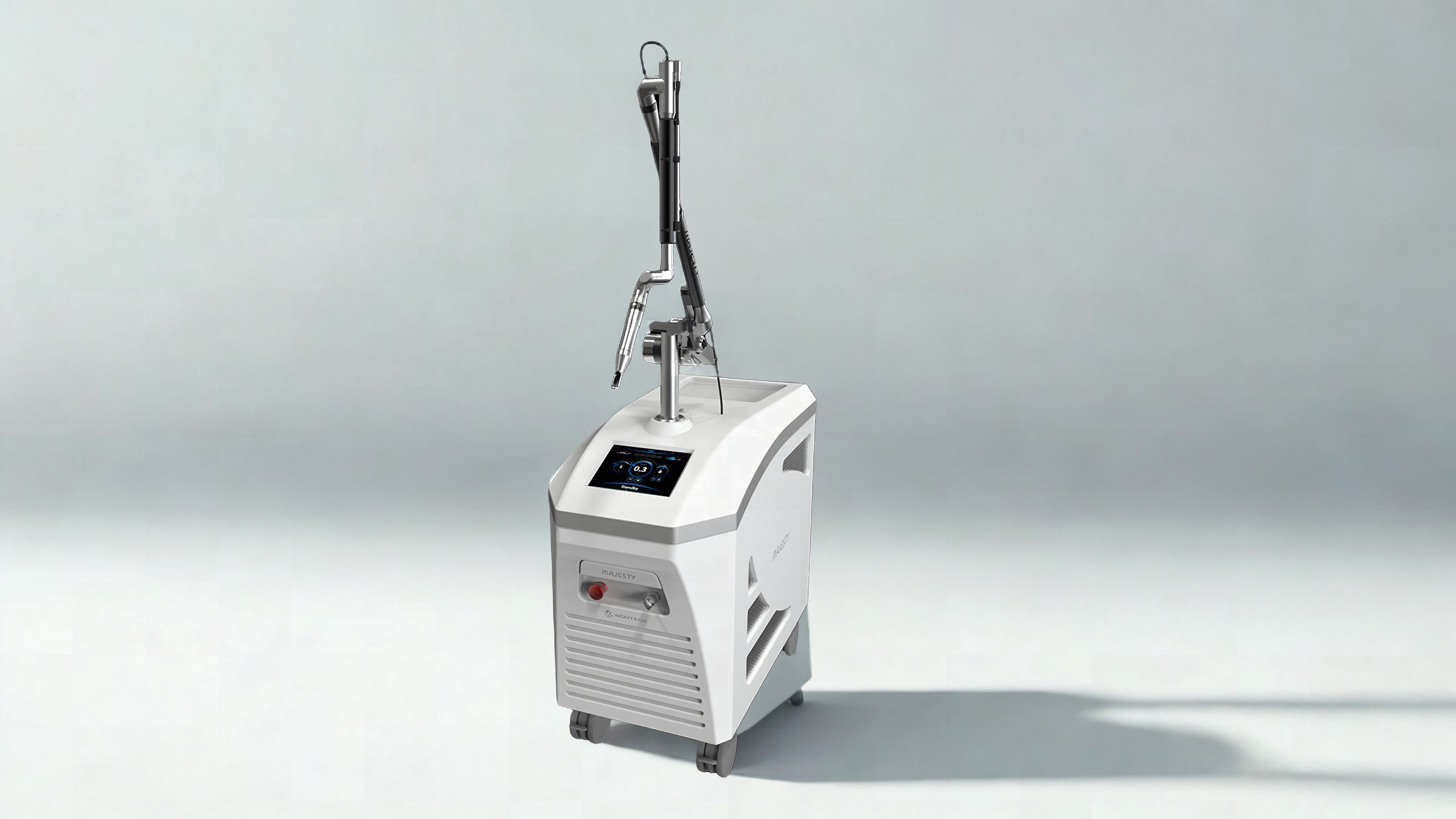
PicoCare Tattoo Removal: How Picosecond Lasers Erase Ink (and Brighten Pigment)
TREATMENTS
PicoCare Tattoo Removal: How Picosecond Lasers Erase Ink (and Brighten Pigment)
A tattoo you loved at 22 doesn’t always fit the life you’re living now, and the question we hear most at Lumini is some version of “Can you actually get rid of it?” The honest answer: modern picosecond lasers like PicoCare remove most tattoos remarkably well, and the same technology can also fade stubborn brown pigment like sun spots and melasma. Here’s the plain-language breakdown, backed by the actual research, so you walk into your consultation already knowing what matters.
What PicoCare is
PicoCare is a picosecond laser, meaning it fires pulses of light measured in trillionths of a second. The older generation of tattoo lasers (Q-switched) worked in nanoseconds, which is a thousand times slower. That speed difference is the whole point: the faster the pulse, the more the energy shatters ink by a mechanical (photoacoustic) shockwave rather than by heat. Less heat means less collateral damage to the skin around the ink, and, for many people, fewer treatments to clear the same tattoo.
How it removes a tattoo
Tattoo ink sits in the deep layer of your skin in particles too large for your body to clear on its own. PicoCare delivers an ultra-fast burst of energy that the ink absorbs and the surrounding skin mostly ignores. The pulse fractures those large particles into microscopic fragments, and then your own immune system does the real work, gradually carrying the debris away over the following weeks. That’s why removal happens across a series of sessions spaced roughly 6–8 weeks apart: each visit breaks the ink down a little more, and your body clears it in between.
What the science says
Picosecond lasers are one of the most-studied advances in modern dermatology. A systematic review in Lasers in Surgery and Medicine concluded that picosecond devices are effective and well-tolerated for tattoo removal and pigment, and in many cases clear tattoos in fewer sessions than older Q-switched lasers.¹ An earlier review focused specifically on tattoo removal reached the same conclusion, picosecond technology improved clearance, particularly for stubborn colors that older lasers struggled with.² Researchers have also mapped why it works, showing how the ultra-short pulse fragments ink particles into a size your body can actually metabolize and clear.³
The same wavelength that erases ink can also break up unwanted brown pigment. A systematic review and meta-analysis of laser therapies for melasma, a common, frustrating pattern of facial brown patches, found picosecond lasers among the effective options when used appropriately.⁴ A 2024 randomized controlled trial found that a picosecond 755-nm laser combined with topical tranexamic acid improved melasma more than the topical alone.⁵
Where we use it at Lumini
- Tattoo removal, black ink responds best, but PicoCare also addresses many colored inks that older lasers left behind.
- Sun spots and age spots, those flat brown marks from years of Miami sun.
- Melasma, used carefully and conservatively, often alongside topicals, because melasma is a managed condition, not a one-and-done erase.
- Overall tone and brightness, fragmenting micro-pigment can leave skin looking clearer and more even.
Is it safe? How long does it take?
Picosecond lasers have an excellent safety record, but they are real medical lasers and outcomes depend on technique, settings, and your skin type. The most common side effects are temporary, redness, swelling, frosting, or a scab over the treated area. Less common risks, like changes in skin color, are exactly why provider skill and proper settings matter so much; a thorough review of tattoo-removal methods details these complications and how careful technique minimizes them.⁶ For tattoos, plan on a series of sessions; the exact number depends on the ink’s age, color, depth, and how your body clears it. Pigment treatments are also done in a planned series rather than a single visit.
It’s not one-size-fits-all
How many sessions you’ll need, which settings are right, and whether a laser is even the best tool for your pigment all depend on the specifics, the ink, your skin type, your history, and your goal. A black-ink wrist tattoo and a multicolor sleeve are very different projects, and melasma in particular demands a conservative, customized plan. This is a clinical decision, not something to estimate from a blog or a flat price. At Lumini, we start with a consultation: our medical team examines the tattoo or pigment, assesses your skin, and builds a realistic plan and timeline that fit you.
At Lumini Medical Spa (Aventura Mall)
We use the PicoCare picosecond laser for tattoo removal and pigment correction, and we treat patients in English, Spanish, and Portuguese. Pricing for laser tattoo removal and pigment treatments is personalized, it depends on the size, colors, and number of sessions your case calls for, which we confirm at your consultation.
Frequently asked questions
How many sessions will I need to remove my tattoo? It varies widely with ink color, age, depth, and your immune clearance, most tattoos take several sessions spaced 6–8 weeks apart. We give you a realistic estimate after seeing the tattoo at your consultation.
Does PicoCare remove colored ink? It addresses many colors that older Q-switched lasers struggled with, though certain pigments are still tougher than black. Picosecond technology has improved clearance of stubborn colors in the published evidence.²
Does it hurt? Most people describe a snapping sensation. We use comfort measures, and treated areas are small per pulse. Discomfort is brief and manageable.
Can the same laser treat my brown spots or melasma? Yes, picosecond lasers are used for sun spots and, carefully, for melasma, often alongside topicals.⁴ ⁵ Melasma is managed conservatively because it can be stubborn and prone to recurrence.
Will my tattoo scar? When performed with correct settings and aftercare, picosecond removal is designed to minimize scarring. Proper technique is what keeps complication risk low.⁶
References
- Wu DC, et al. A Systematic Review of Picosecond Laser in Dermatology: Evidence and Recommendations. Lasers Surg Med. 2021. PMID: 32282094. https://pubmed.ncbi.nlm.nih.gov/32282094/
- Hsu VM, et al. The picosecond laser for tattoo removal. Lasers Med Sci. 2016. PMID: 27056705. https://pubmed.ncbi.nlm.nih.gov/27056705/
- Qu Y, et al. The Picosecond Laser Effects on Tattoo Removal and Metabolic Pathways. Clin Cosmet Investig Dermatol. 2021. PMID: 34594124. https://pubmed.ncbi.nlm.nih.gov/34594124/
- Lai D, et al. Laser therapy in the treatment of melasma: a systematic review and meta-analysis. Lasers Med Sci. 2022. PMID: 35122202. https://pubmed.ncbi.nlm.nih.gov/35122202/
- Zhou N, et al. Safety and efficacy of a picosecond 755-nm alexandrite laser combined with topical tranexamic acid in the treatment of melasma. J Cosmet Dermatol. 2024. PMID: 39234928. https://pubmed.ncbi.nlm.nih.gov/39234928/
- Kassirer S, et al. Laser tattoo removal strategies: Part II: A review of the methods, techniques, and complications involved in tattoo removal. J Am Acad Dermatol. 2025. PMID: 38980249. https://pubmed.ncbi.nlm.nih.gov/38980249/
Medically reviewed by Dr. Thiago Queiroz, D.O., Medical Director, Lumini Medical Spa. Educational, not a substitute for an in-person consultation.